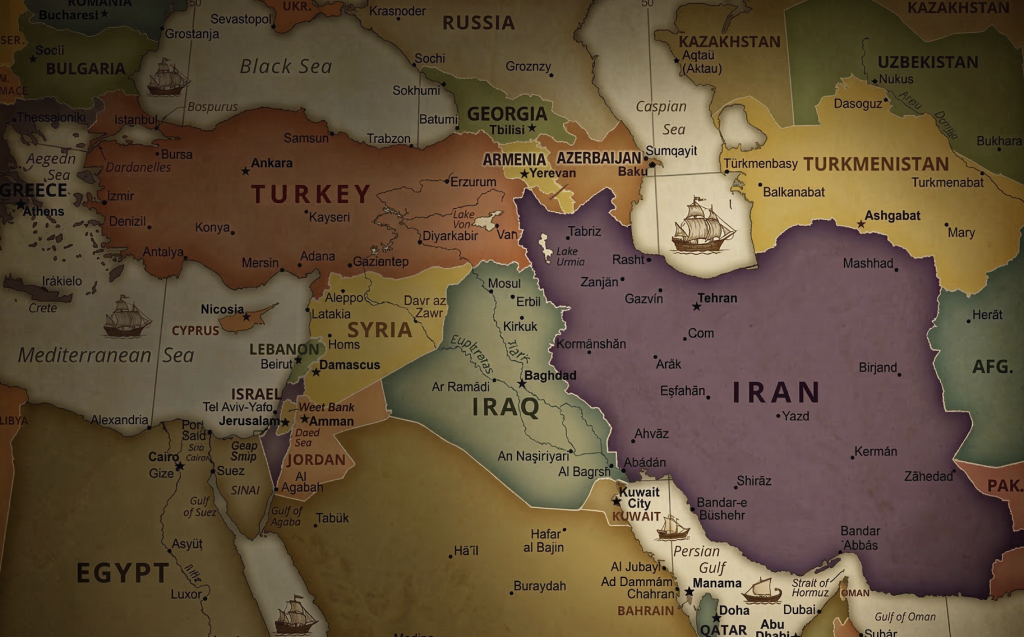
This report examines how Iran’s policy toward the South Caucasus has evolved since the Second Nagorno-Karabakh War in 2020, which overturned the regional status quo that had prevailed since the 1990s and altered the regional balance of power. It analyzes the security and geoeconomic challenges and opportunities these changes created for Iran, the interests Tehran has sought to protect and advance, and the policy instruments it has employed. It also assesses the extent to which Iran has achieved its objectives. The study underwent internal editing and peer review, as well as external review by three Iran experts.
Executive summary
Iran has pursued a set of policies in response to three connected threats that emerged after the 2020 Nagorno-Karabakh War began to unsettle a decades-old regional order dominated by Russia. Iran had long absented itself from the region’s main diplomatic and security engagements. Tehran was comfortable with Russia’s dominance, which kept US influence at bay, and focused instead on priorities elsewhere, notably in the Middle East. With limited access to formats that addressed South Caucasus affairs, especially the Armenia–Azerbaijan conflict, Tehran had few channels through which to shape regional outcomes and few tools to influence the policies of individual South Caucasus states. The 2020 war marked the beginning of an effort to build influence largely from scratch, mainly through bilateral relations.
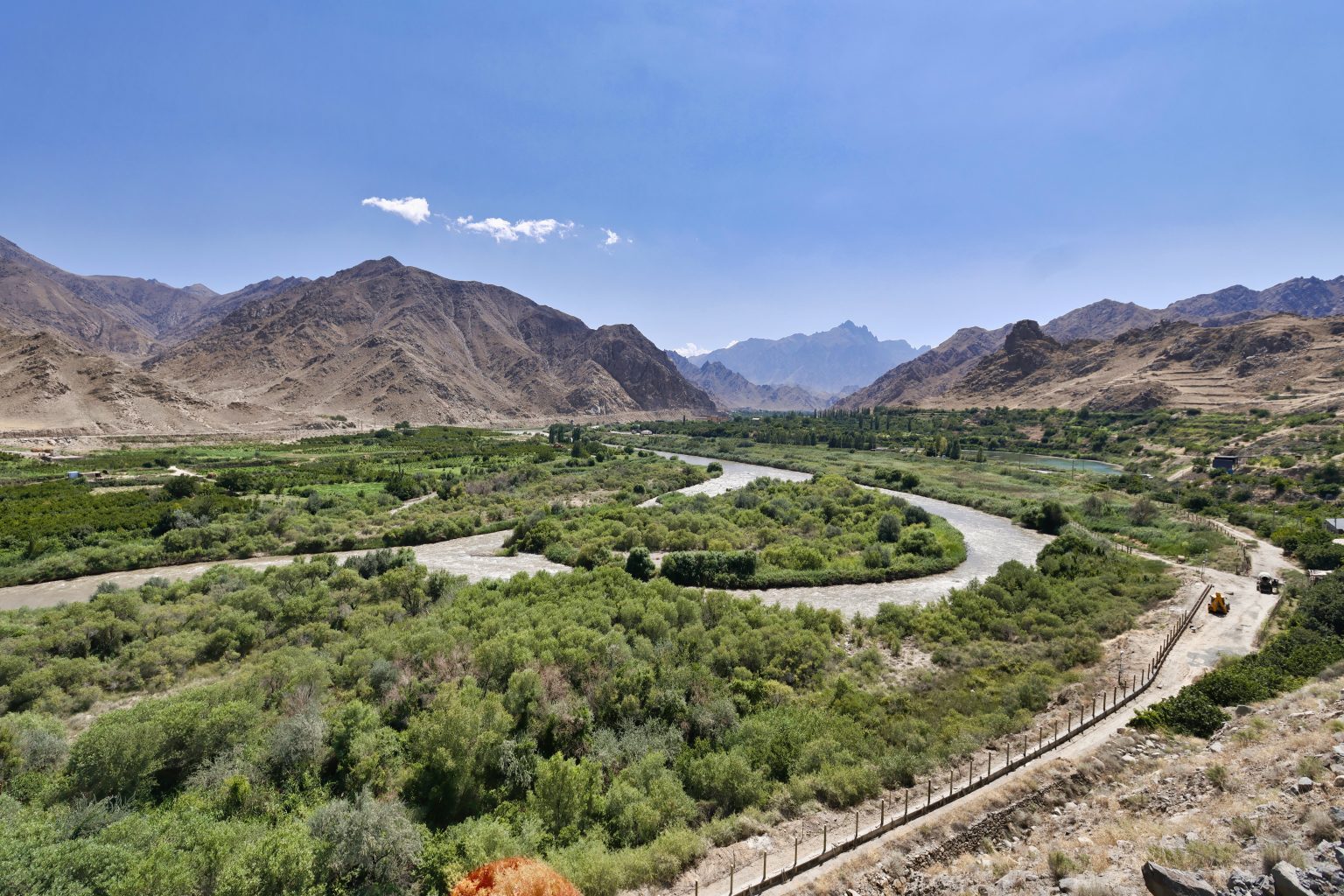
The first perceived threat has been Azerbaijan’s aspirations to territorial expansionism. The shift in the regional balance in 2020 in Baku’s favor encouraged military incursions by Azerbaijan into Armenia in 2021 and 2022, and pressure for an extraterritorial “Zangezur Corridor” near Iran’s border. Tehran viewed these actions with concern, especially the threat of having its physical link to Armenia severed. Tehran responded by seeking to deepen ties with Yerevan, expanding its consular presence in southern Armenia and using military signaling against Azerbaijan, including drills near its northern borders. It also sought to mitigate the postwar imbalance between Armenia and Azerbaijan, notably by helping Yerevan rebuild part of its deterrent capacity.
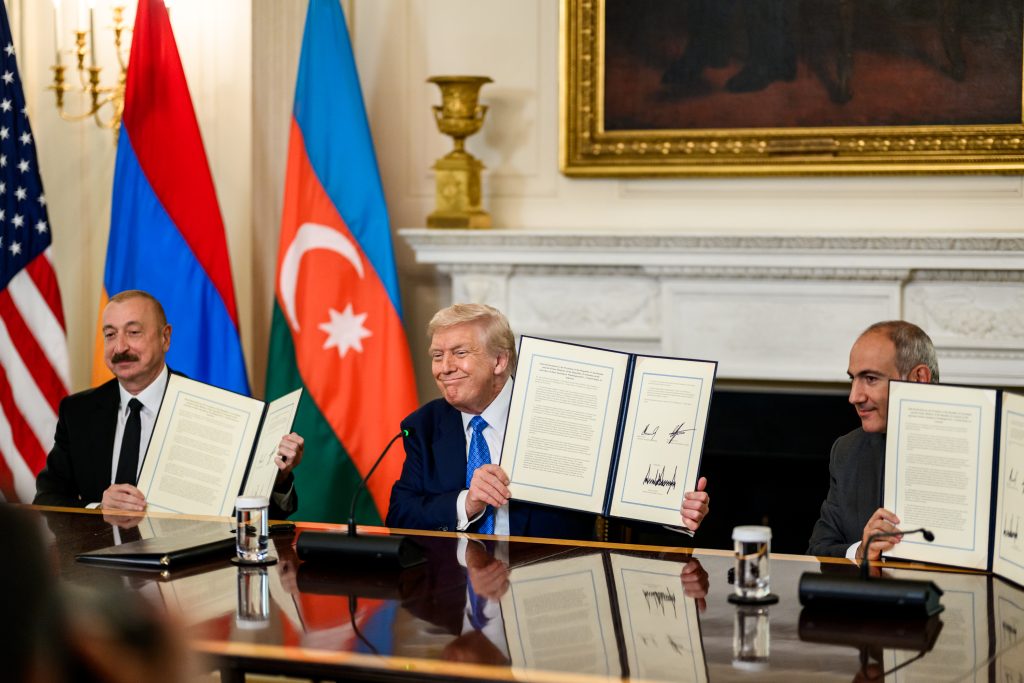
The second threat has been foreign presence in Armenia and Azerbaijan perceived as directly hostile to Iran. The weakening of Russia’s dominance after 2022 opened the door to greater nonregional involvement in the South Caucasus, which Tehran viewed as unwelcome and, in the case of the United States and Israel, directly hostile to its interests. In Armenia’s case, Tehran’s approach was more nuanced. It has not opposed increased European Union, French, Indian, and even limited diplomatic US engagement when this helped strengthen Yerevan’s deterrence and reduce the risk of Azerbaijani escalation—objectives Iran has also been seeking to advance. That view, especially of the United States, changed after the unveiling of the Trump Route for International Peace and Prosperity (TRIPP) in August 2025, which envisaged heavy US involvement in designing, investing, and managing a route right on Iran’s border with Armenia, raising the prospect of a US role along Iran’s border with Armenia. If Azerbaijan’s aspiring territorial expansionism against Armenia had previously been Tehran’s main concern, Armenia’s support for the TRIPP has now become a source of serious concern.
As for Azerbaijan, its 2020 victory, followed by deepening security and military ties with Israel, Türkiye, and Pakistan, expanded those countries’ strategic footprint along Iran’s northern frontier. Tehran viewed Israel’s role as a direct security threat, while seeing Turkish involvement as emboldening Baku against not only Armenia but also Iran. Its initial response was confrontational: unilateral military drills, sharp warnings, and a sharp downturn in relations with Baku. From 2023 onwards, however, Tehran adopted a friendlier approach, improving diplomatic and security ties with Baku and placing greater emphasis on cooperation and dialogue to compel Azerbaijan to respect Iran’s red lines.
The third threat has been the potential for geoeconomic isolation. The prospects for Armenia–Türkiye and Armenia–Azerbaijan normalization have revived discussions about unblocking regional transport links, including road, rail, and energy routes, through Armenia. Together with the TRIPP, these developments deepened Iran’s concern of exclusion from new East–West connectivity corridors. Until then, many of these routes had passed through Iran. Tehran’s response has been largely bilateral and has followed two tracks. It has offered alternatives for East–West connectivity to Azerbaijan, while the TRIPP remains unrealized, and borders remain closed. It has also sought to promote northward connectivity, especially through the International North–South Transport Corridor (INSTC), a key Russia–Iran connectivity framework involving Azerbaijan, Armenia, and Georgia, which creates a counterweight to some of the East–West routes that Tehran views as partly designed to circumvent it.
Thus far, Iran’s policy in the region has produced mixed results. With Armenia, Iran has deepened bilateral ties, deterred Azerbaijani expansionism, and helped prevent the forcible establishment of the so-called “Zangezur Corridor.” It has also remained involved in regional connectivity projects. Relations with Azerbaijan have moved from open hostility in 2020 to a more pragmatic footing, marked by frequent communication and a shared interest in avoiding escalation, even as mutual suspicion persists. Yet these gains remain reversible. The growing US role, Armenian and Azerbaijani endorsements of the TRIPP, and Israel’s continued presence in Azerbaijan have fueled Tehran’s concerns over hostile external involvement on its northern frontier. At the same time, Iran remains largely outside the formats shaping the South Caucasus’s future order.
The terms that will end the US–Israeli war on Iran will be consequential for its policy in the South Caucasus. Regardless of the outcome of the negotiations, Tehran is unlikely to abandon its regional objectives, which reflect core state interests rather than the preferences of any leader or government. But the outcome of the war will shape how assertively Tehran can pursue them. If Iran emerges on favorable terms, it will likely be better placed to turn that outcome into leverage over its northern neighbors and press them to respect its interests. If it emerges weakened, its already limited toolkit of influence in the South Caucasus will likely become even less effective.
Cite this research report: Melkonian, Sergei. "Iran's Policy in the South Caucasus: Three Objects, Mixed Result". Septmeber 2026. Applied Policy Research Institute of Armenia (APRI Armenia). DOI: https://doi.org/10.71308/PGZW1863