As of 16 March 2026
On February 28, 2026, Israeli Prime Minister Benjamin Netanyahu and US President Donald Trump announced the launch of military operations against Iran, designated “Roaring Lion” and “Epic Fury,” respectively. In response, Tehran launched Operation “True Promise-4.” This new conflict has already surpassed the 12-day war of June 2025 in terms of duration and scale.
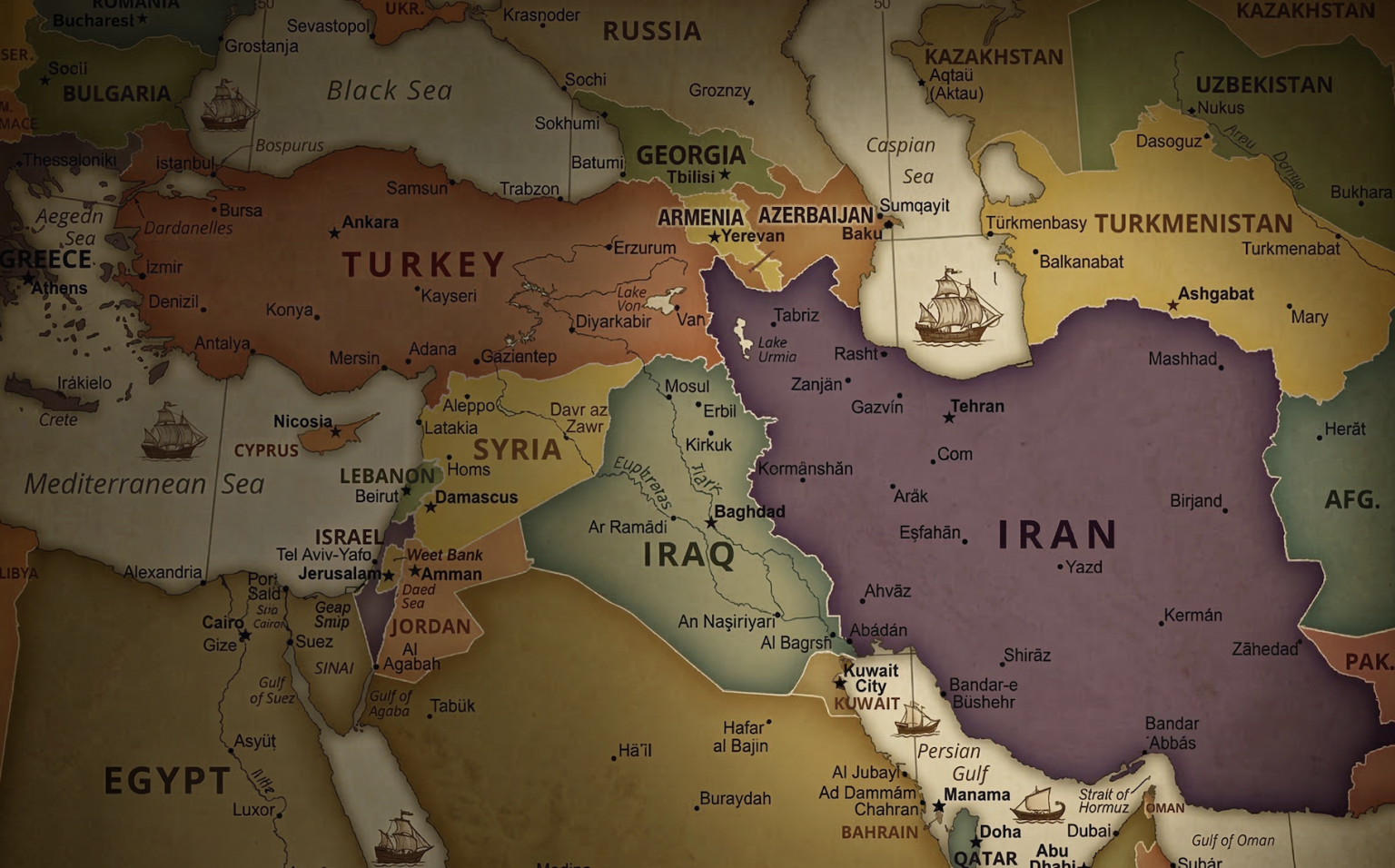
While the South Caucasus is often overlooked and expert and policy analysis focuses more on the impact on the Middle East, the importance of the South Caucasus when examining the war is nonetheless significant. The region tests the strength of the US and Iran’s power projection, may serve as a potential gateway for refugees, and is at the heart of several connectivity projects that could transform global supply chains.
This APRI Armenia Analysis examines the risks and opportunities arising from the war, both for Armenia and the South Caucasus, and suggests pathways for addressing them:
- The war underscores both the fragility and significance of the window of opportunity to unlock regional routes and borders.
- Providing humanitarian assistance within Iran should be a priority for Armenia and the other South Caucasus countries to help mitigate regional instability risks.
- An unprecedented opportunity has emerged to engage regionally on common ground and interests.
What does the war mean for Armenia?
Security
Today, Armenia remains the only one of Iran’s neighbours that has not been targeted. The likelihood of security incidents occurring on Armenian territory, such as the overflight and interception of Iranian missiles toward Türkiye or drone strikes targeting the airport in Nakhijevan, remains low.
The only potential area of security concern in the medium and long term would be Armenia’s joint projects with the United States that Iran might perceive as “dual-use infrastructure,” such as the announced AI data center in Hrazdan (similar facilities to which have been targeted in Arab countries), or any US presence near Iran’s border as part of the functioning of the Trump Route for International Peace and Prosperity (TRIPP). If Iran’s ambivalent response in the months following the Washington Summit indicated a constructive attitude toward certain aspects of TRIPP, especially the railway route, the war has reinforced the skeptical arm of the Iranian position.
Longer term, instability from the central governance of Iran may create logistical, and indeed political, concerns for Yerevan for the delivery of weapons from Southern markets, such as India, although other, more complicated, alternatives exist.
Economy
As of now, the economic impact of the war on bilateral economic cooperation such as trade and the energy deal appears to be minimal while a more concerning issue pertains to the hurdles for Armenia’s access to Southern markets and vice versa.
Despite the continued growth in trade between Yerevan and Tehran, Iran accounts for US $768 million, or 3.6% of Armenia’s total trade turnover in 2025, which is not a critical figure. However, Armenia’s dependence on Iran for some goods, such as bitumen, chalk, and cement, is rather high and alternative sources of import are more expensive. Long-term disruption to Iranian supply routes could lead to elevated inflation in Armenia. Beyond the small bilateral trade ties, more than 20% of Armenia’s foreign trade passes through Iran. According to Armstat (the Statistical Committee of the Republic of Armenia), Armenia exports cigarettes and livestock to the Middle East, and imports toys, textile, paper, and furniture mostly from China. These flows rely on Iranian territory. Exports to the Middle East via Iran may be rerouted via Georgia and Türkiye without significant increase of transportation costs, and imports from China via Iran can be partly rerouted via Georgia and partly replaced by imports from other countries. Regardless of the developments in Iran, the country will need electricity from Armenia, which is supplied under a “gas for electricity” agreement (Armenia uses gas supplied by Iran to produce electricity, which in turn is supplied to both Iran and the domestic market). A deterioration of Iran’s gas-producing infrastructure could disrupt gas supplies, leading to lower overall bilateral trade turnover. It would also result in a negative supply shock for the Armenian economy. In the short term, a full disruption to Iranian gas flows would put upward pressure on gas and electricity prices. The impact depends, however, on the size of the disruption to gas flows and the speed with which Armenia can pivot to alternative energy markets.
A decline in tourism due to the war in Iran could also impact Armenia’s economy. A slowdown in Iranian tourists, who rank third by volume with an 8% share in 2025, as well as tourists from other countries who travel to Armenia via Iran, would be a drag on Armenia’s economic growth.
Humanitarian dimension
The war could trigger an influx of refugees from Iran to Armenia, although this depends on the functionality of Iran’s state apparatus and internal stability in the long term. If by the end of the war Iranian institutions are dysfunctional, this would trigger a large-scale movement of refugees, which would put significant pressure on the region’s social welfare and healthcare systems.
Armenia has faced several recent waves of refugees and relocants: in 2020 (from Nagorno-Karabakh following the second war, and from Lebanon following the Beirut port explosion), in 2022 (from Russia after the hostilities against Ukraine started) and in 2023 (following the ethnic cleansing of Nagorno-Karabakh Armenians). Each time, the limits of the system to host and absorb refugees have been tested and the government and society have adapted, in most cases, with support from diplomatic partners. Despite the departure of some Russians, Armenia’s capacity in terms of social infrastructure is likely to be limited.
The entry to Armenia of relatively low numbers of Iranian Azerbaijani refugees, even in the range of tens of thousands, could trigger tensions between them and the local Armenian population, which could potentially be used by Baku as a pressure point on Armenia. Should Iran’s political system change, it may lead to an influx of mid- and low-level members of the Islamic Republic’s security apparatus, who would flee from persecution.
The likelihood of a refugee influx to Armenia is currently low, and will remain so for as long as the Iranian state apparatus remains relatively stable, but this risk might resurface should hostilities between Iran, Israel, and the US continue in the medium term. In other words, preparedness for humanitarian assistance and societal resilience remains necessary from a policy perspective.
Where do we go from here?
Given the change in the scale and nature of the new war, the Armenian government should:
- Establish an interagency task force: It is likely that hostilities between Iran and Israel will resume even when the current phase ends. To help the country prepare for future hostilities, we recommend that the Armenian government set up a task force to analyze the situation around Iran, including representatives from the Ministry of Foreign Affairs, the Ministry of Defense, the National Security Service, the Foreign Intelligence Service, the Ministry of Finance, and the Ministry of Economy.
- Strengthen security at Syunik’s borders with Azerbaijan, the Nakhijevan Autonomous Republic, and Iran: Given the fragile security predicament of Armenia’s southern region, we recommend that defenses in Syunik be maintained at high operational readiness, especially for Air Defence troops, and that further plans are developed to ensure the region’s resilience in crisis situations.
- Mitigate risks related to TRIPP, the AI data center, and other projects that may involve US companies through proactive communication with Iranian partners, familiarizing them with the content of these projects so as to avoid possible misunderstandings. Risks should also be reduced by ensuring that security-related companies or personnel affiliated in any way with the United States are not present in the immediate vicinity of the Iranian border, taking into account the safety of such personnel and the objectives of the TRIPP project.
- Launch a humanitarian initiative in Iran itself: The Armenian government could launch a humanitarian initiative to provide food, medical, and other forms of assistance to the population of Iran’s neighboring regions. Delivering aid across the border would help Iranian society recover more quickly in the aftermath of the crisis, demonstrate Armenia’s positive intentions toward Iranian citizens of Azeri descent, thereby reducing potential anti-Armenian sentiments, and mitigate the risk of population flows moving toward Armenia.
- Consider expanding the underground gas storage facility and oil storage facilities in Abovyan to strengthen Armenia’s energy security and resilience: Global and regional energy markets are likely to remain volatile. While Armenia’s energy agreement with Russia remains in effect until 2043 in principle, a larger volume of oil and gas reserves would help enhance Armenia’s energy security in the face of severe disruptions and price fluctuations.
What does the war mean for the region …
… when it comes to regional stability?
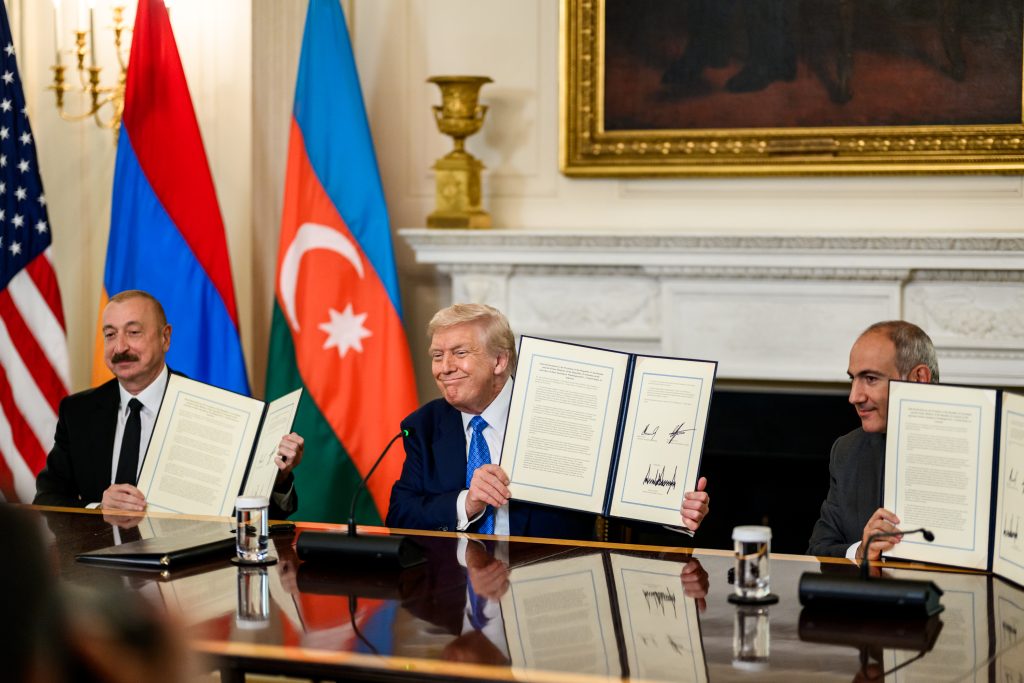
The August 2025 Washington Summit created an unprecedented momentum to institutionalize peace between Armenia and Azerbaijan and for Türkiye and Armenia to normalize relations, but this momentum has not yet materialized, due to Baku’s and Ankara’s inaction, thereby keeping the region in the limbo of a “no peace–no war” situation.
The ongoing war in Iran underscores the necessity for durable stability and security in the South Caucasus as an important component of the region’s resilience and prosperity. As two wars continue to rage to its north (Ukraine) and south (Iran), with rather unpredictable ramifications, sustaining the current “no peace–no war” situation makes the South Caucasus even more vulnerable to external shocks and influences. This high degree of uncertainty reduces the transit and logistical potential of the South Caucasus, affecting Armenia, Azerbaijan, Georgia, and even Türkiye’s connectivity aspirations.
Armenia has long been ready for the signature and ratification of the peace agreement with Azerbaijan and the full opening of borders with Azerbaijan and Türkiye. Prime Minister Pashinyan underscored this yet again in his recent address at the European Parliament.
Azerbaijan and Türkiye may finally put aside their policy of procrastination, and accept normalization. During his speech at the 13th Global Baku Forum on March 12, President Aliyev emphasized that Azerbaijan was committed to peace—“not just long lasting, but peace forever.” The signature and ratification of a peace agreement with Armenia and the restoration of all communications would be the best proof of these stated intentions. Otherwise, Azerbaijan may continue using preconditions, such as changes to Armenia’s constitution, to postpone the normalization process.
… when it comes to connectivity?
The TRIPP project could face new challenges. If the Iranian regime survives in its current form, its leadership will likely have even harsher anti-American sentiments and could be minded to undermine the US-led project. This would compromise the potential for TRIPP to act as a facilitator of cargo transit between Asia and Europe, limiting its ability to carry large amounts of critical minerals to Western markets, as envisaged in the Joint Statement on Intent of Economic Cooperation. The current and any ensuing conflict could make TRIPP more of a local link between Azerbaijan, Nakhijevan, and Türkiye, without really realizing the international peace and prosperity promised in the very name of the project.
Having said that, TRIPP could be seen as more vital than before. Iran is one of the critical transit hubs for the Belt and Road Initiative, allowing goods to pass from China to Europe. A more fragile Iranian supply apparatus could motivate further supply-chain diversification, making the use of the Middle Corridor, including TRIPP, more attractive. From Azerbaijan’s perspective, its tensions with Iran would strengthen TRIPP’s urgency, at least as a connection to Nakhijevan and Türkiye. Baku may be less inclined to use the Aras Corridor that connects mainland Azerbaijan to Nakhijevan via Iran.
The prospects for the International North–South Transport Corridor (INSTC) hang in the balance. Whether or not it continues to function depends on whether the Iranian state remains stable. If the state does not collapse and Iranian supply infrastructure remains intact, the corridor may continue to facilitate North–South trade flows, although the US may put pressure on Azerbaijan, Kazakhstan, and Turkmenistan to prevent the use of their territory. However, if the war ends with the emergence of a dysfunctional Iranian state apparatus, the implementation of INSTC, including gas pipeline, and electric grid projects through Azerbaijan will be more challenging.
The Persian Gulf–Black Sea Corridor, which seeks to strengthen Iran’s connectivity with Europe through Armenia, Georgia, and the Black Sea, will face serious challenges. The US will likely try to undermine the launch of this corridor as part of its anti-Iranian containment policy.
Where do we go from here?
The Iran War once more underscored the lack of stability and predictability in regional and global geopolitics. To be better prepared for these types of shocks and increase the resilience of the South Caucasus, its countries should take steps to move the normalization process and restoration of communications forward. In particular, Armenia, Azerbaijan, and Georgia should start consultations about possible joint actions to reduce the negative impact of supply chain disruption and to implement burden sharing in case of refugee influx. These developments could lay the groundwork for the development of a regional identity, something the South Caucasus has been lacking since the collapse of the Soviet Union.
The analysis is also available in Armenian.