Protected: 🔒 Stability in the Greater Middle East
There is no excerpt because this is a protected post.
Protected: 🔒 Stability in the Greater Middle East Read More »

There is no excerpt because this is a protected post.
Protected: 🔒 Stability in the Greater Middle East Read More »
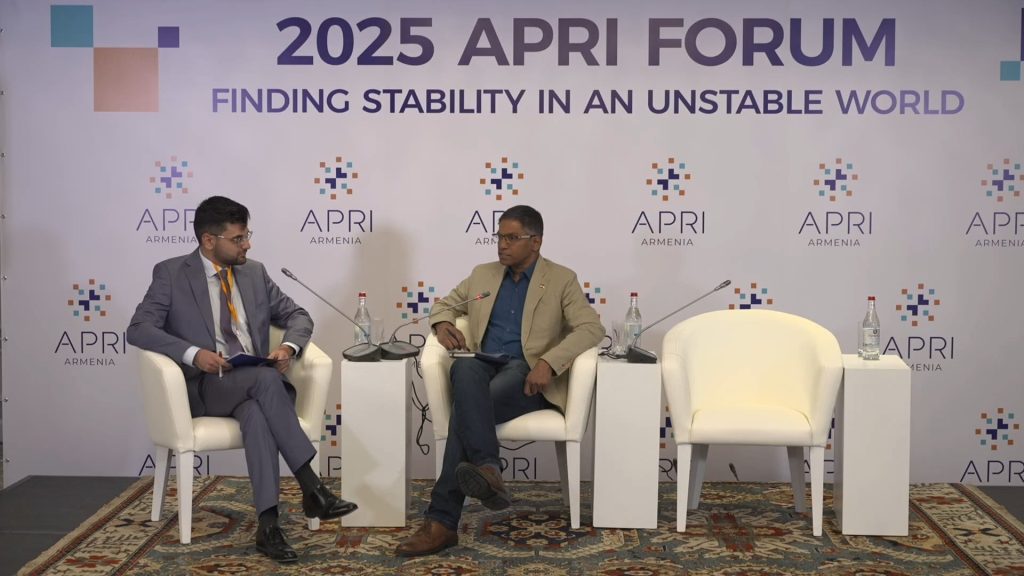
In this conversation, noted economist Pranjal Sharma discusses his experience spanning technology, globalization, and inclusive growth, and shares key lessons on how to fast-track foreign direct investments and sustainable economic partnerships. What are the key variables of economic partnerships in the current global economic order? How can Armenia go about deepening strategic economic ties with new country partners such as India, the countries of the Gulf Cooperation Council, and Central Asia, and attracting key foreign investments?
Global Lessons on Fast-tracking Foreign Direct Investment Read More »
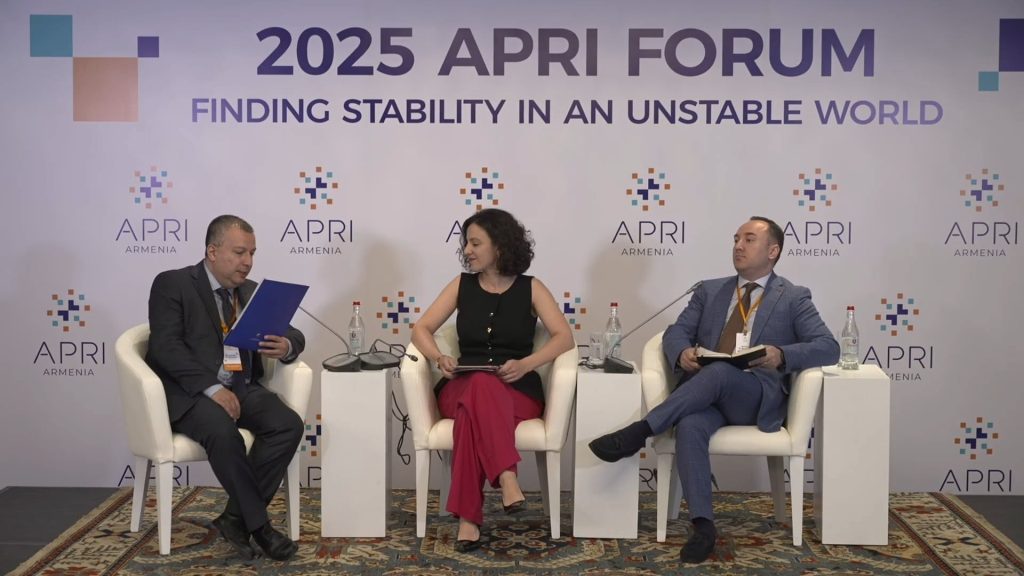
The recent establishment of a strategic partnership between Georgia and Armenia has great potential for alignment on regional issues between two neighbors who have often overlooked one another. This conversation will focus on outlining Georgia’s foreign policy with the South Caucasus countries and external actors such as Russia, Europe, and China, and explore pathways for Georgia and Armenia to take their relationship forward. What more could be done to deepen economic and strategic ties to a key neighbor who plays a vital role in connecting Armenia to its major trading partners?
Rediscovering Georgia Read More »
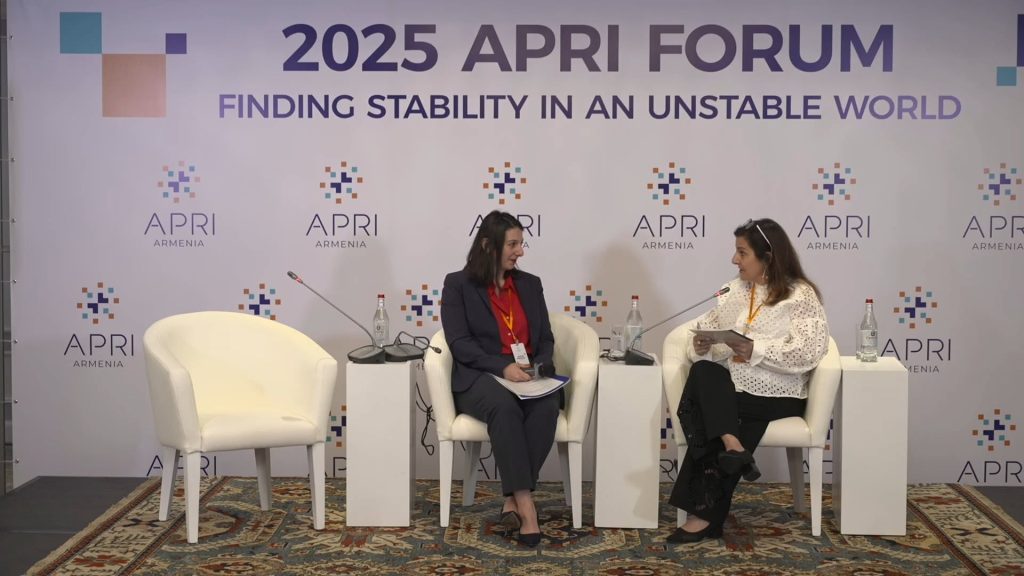
This fireside chat will explore how investing in health—through improved nutrition, chronic disease prevention, and mental health support—can serve as a catalyst for improving population health across the country. The conversation will also highlight actionable strategies that link public health to national security, emphasizing how poor health among enlisted servicemen can compromise military readiness and resilience—especially in vulnerable border regions.
Advancing Health for National Security Read More »
Armenia will host the Conference of the Parties to the Convention on Biodiversity in 2026, providing an opportunity to highlight leadership in a key environmental arena. The 17th Biodiversity COP will focus on enhancing efforts to stop and reverse biodiversity loss by 2030, a critical deadline to ensure that the world does not overshoot planetary ecological limits. What must Armenia do to ensure success in hosting its largest global conference to date? How can it enhance its own efforts to preserve biodiversity, security, and human development? Is it ready to take the lead on ensuring vital progress at COP17? And finally, what kind of a deterrence role can COP17 play in regional stability?
A Prelude to COP17 Read More »
Boosting economic resilience in Armenia should contribute to greater deterrence capabilities. After the intense short-term economic growth experienced in the past few years, how does Armenia capitalize on the moment to achieve long-term economic viability? This conversation will assess Armenia’s economic growth and strategies to develop a more sustainable, inclusive, and resilient economic future.
Building Resilience through Economic Growth Read More »

Nuclear energy is central to Armenia’s energy needs, as the Metsamor Nuclear Power Plant (NPP) generates a third of the country’s electricity. With the Metsamor NPP due to be decommissioned in 2036, Russia and the United States are open to building the next reactor in Armenia—with China and South Korea also under consideration. The decision will include technical considerations around cost, safety, and energy production, as well as geopolitical matters. Areg Danagoulian is Associate Professor of Nuclear Science and Engineering at MIT, whose research focuses on nuclear security and on applications of nuclear physics to societal problems. He will discuss the current status of nuclear power, its global challenges, and its potential impact on Armenia’s energy security.
Armenia’s Nuclear Future Read More »

Washington and Tehran are talking seriously again, raising the possibility of a deal on Iran’s nuclear program and the possible lifting of sanctions. Although any agreement may be some way off, both sides appear to be more open than in years to finding a way out of the decades-old impasse. What are the real prospects for a reduction in tensions? What would a deal mean for the region? How could Armenia capitalize on reduced tensions and a growing, and open, Iranian economy?
Solving the Iran Equation: US–Iran Negotiations and Regional Peace Read More »

Trade and security tensions between Europe and the United States are heightening as European leaders look to develop their strategic autonomy. The European Union has been actively engaged in Armenia and the region since 2022 and the current state of both regional and Euro-Atlantic affairs provides a litmus test of Brussels’ foreign policy aspirations. What shape will Europe’s policy toward the region take as bilateral relations with each of the three South Caucasus nations continue to evolve?
Understanding Europe’s Outlook on the South Caucasus Read More »

There is no excerpt because this is a protected post.
Protected: 🔒 Prospects for Iran–Armenia Relations Read More »

Diplomatic relations between Yerevan and Moscow have intensified since mid-2024, while the economic relation remains strong. The need for a reset is now discussed between the two. How might Armenia and Russia capitalize on this moment? What are their mutual expectations? What role will Armenia, and the South Caucasus, take in Russia’s foreign policy? How will Armenia’s foreign policy diversification affect the Armenia–Russia relationship?
Russia’s Foreign Policy and Russia–Armenia Dynamics Read More »

Despite high-level announcements, the Armenia–Turkey normalization process is at a standstill. Turkish President Recep Tayyip Erdoğan links normalization with Ankara to the signing of a peace agreement between Armenia and Azerbaijan, leading to a seeming deadend. What is behind this and are there any prospects for change? How might a less Azerbaijan-focused Turkish foreign policy impact the region? Can external actors, including Europe, Russia, the United States, and Iran, provide effective support for Armenia–Turkey normalization?
Armenia–Turkey Normalization and the Quest for Regional Stability Read More »