
Yerevan, Armenia
- June 26-28, 2024
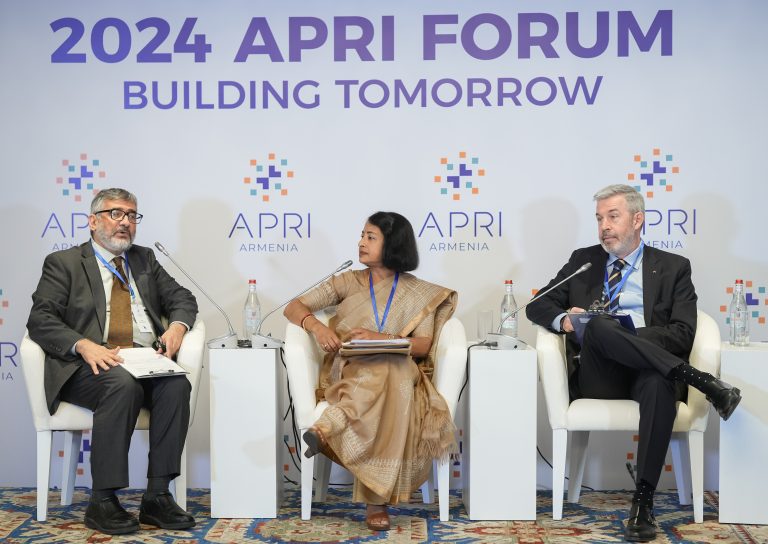
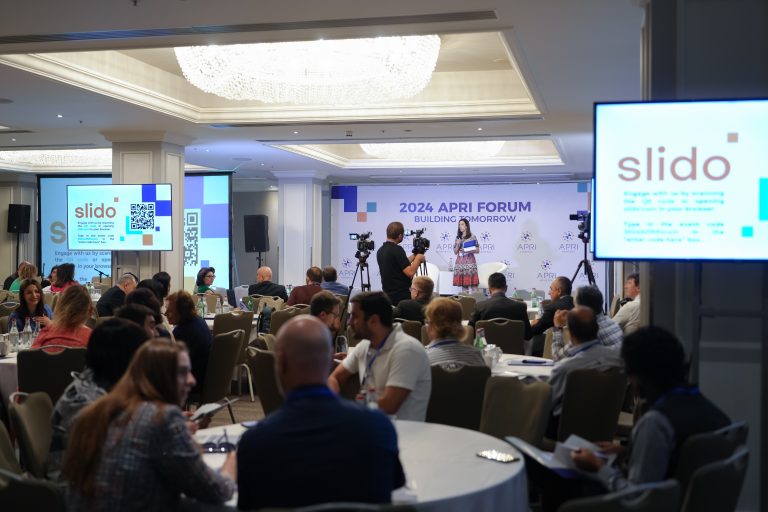
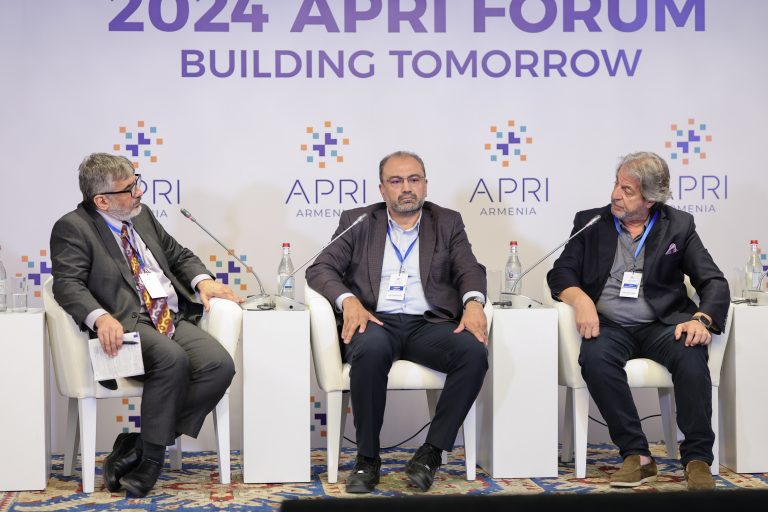
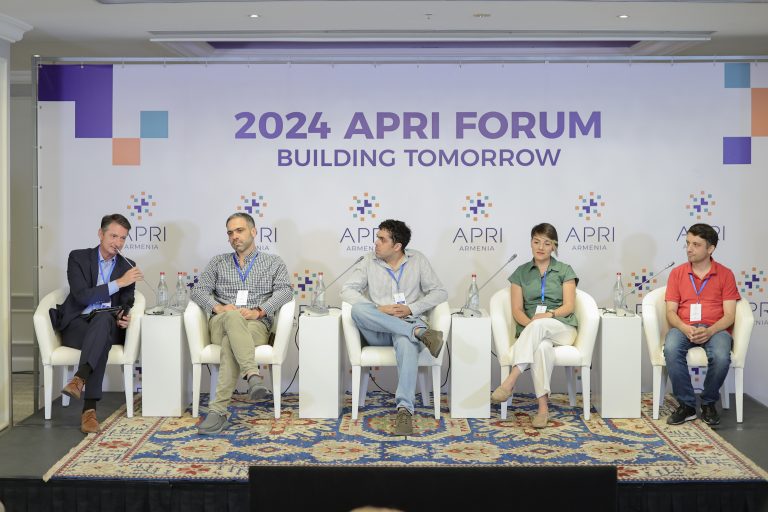
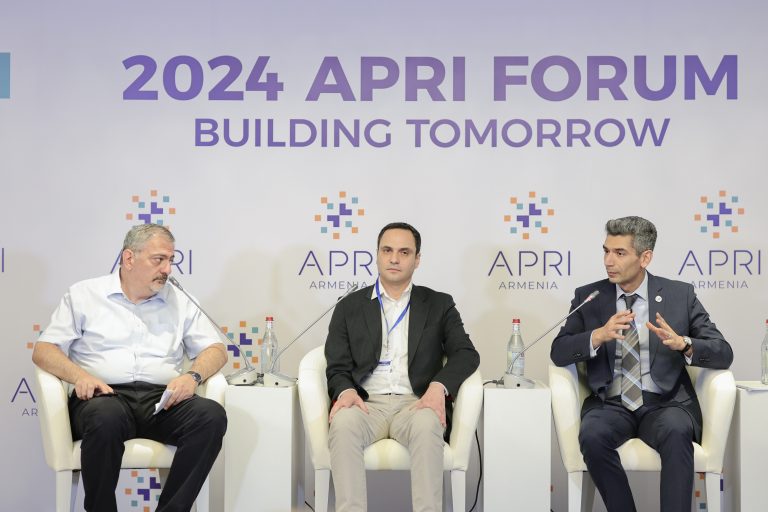
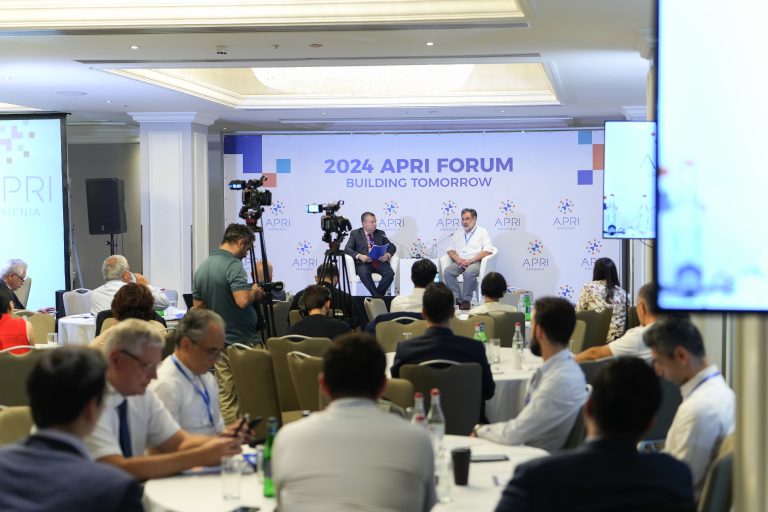
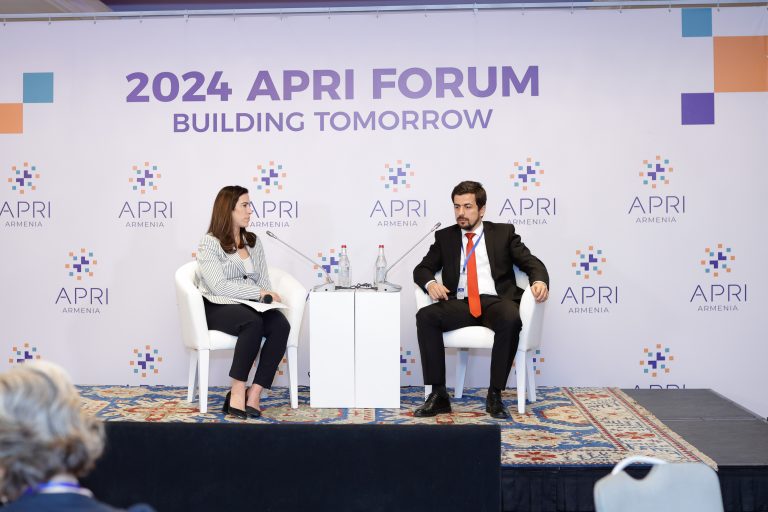
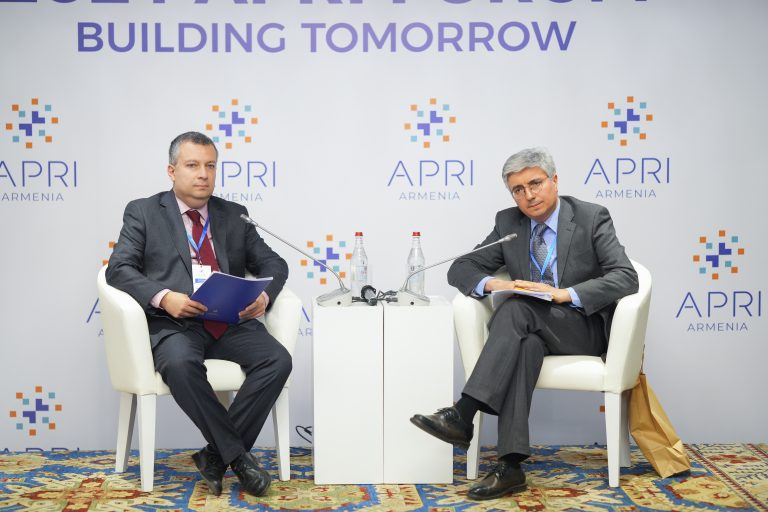
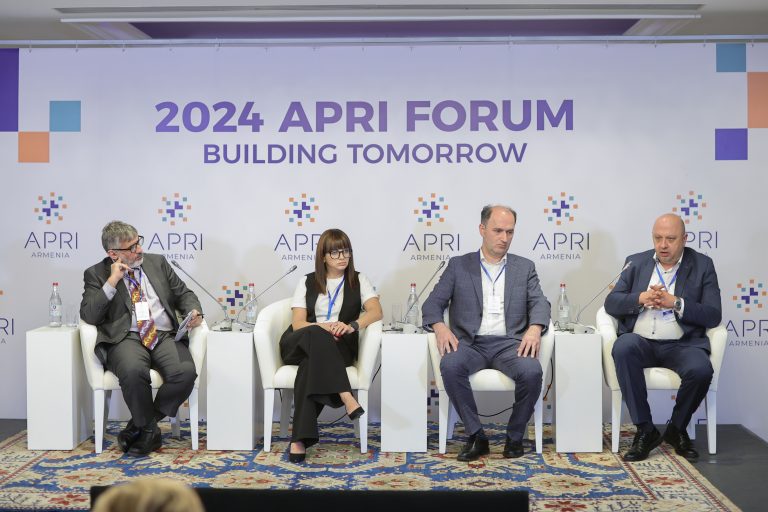
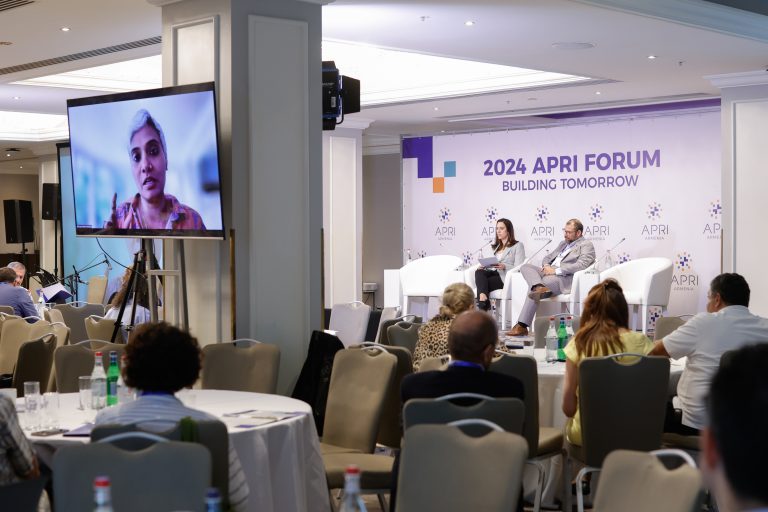
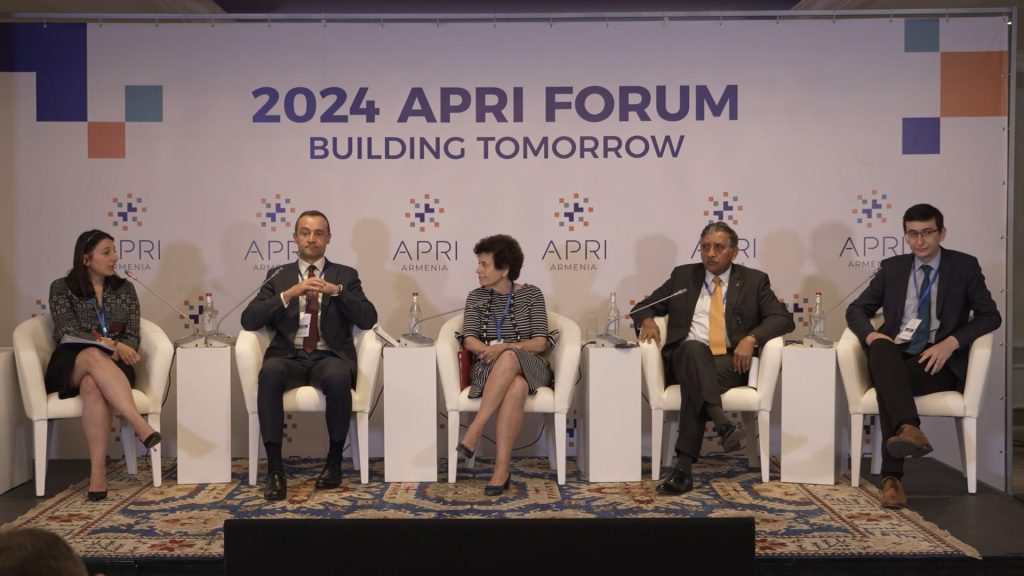
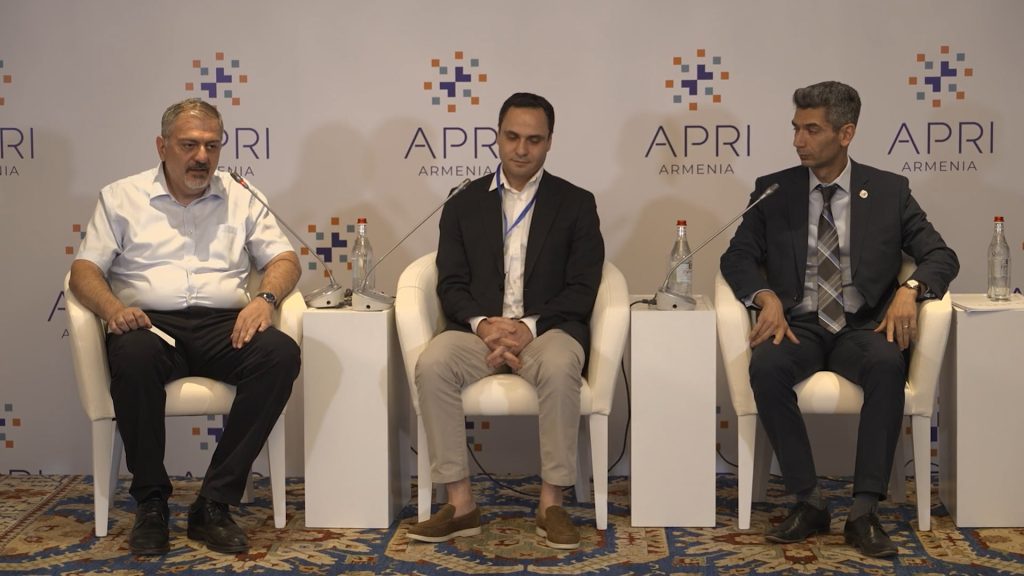
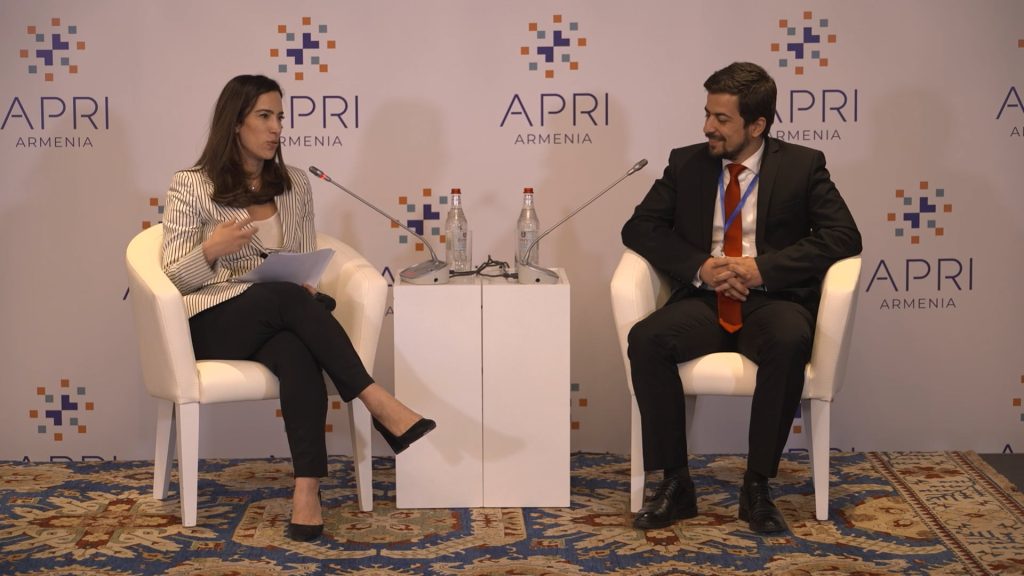
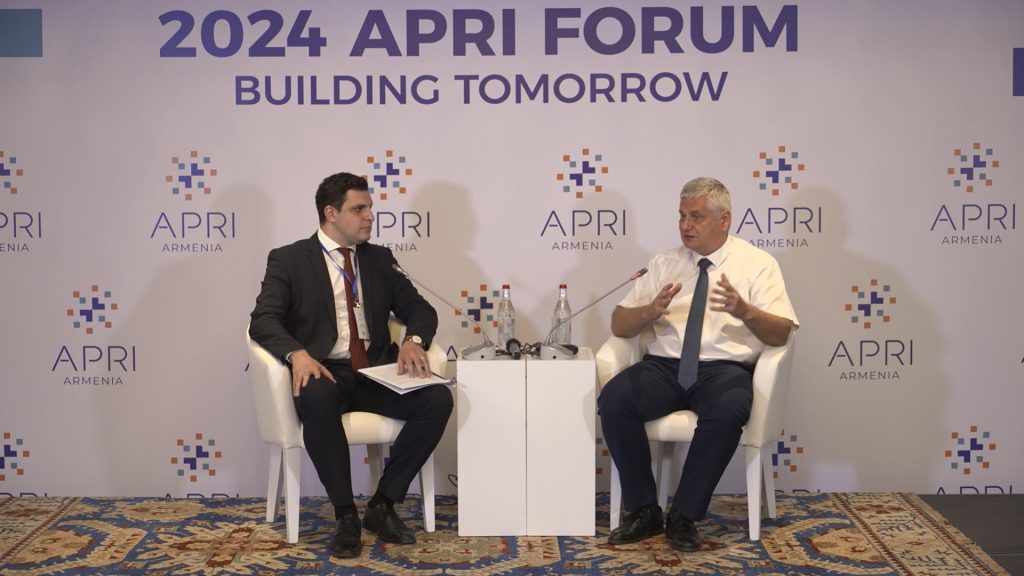
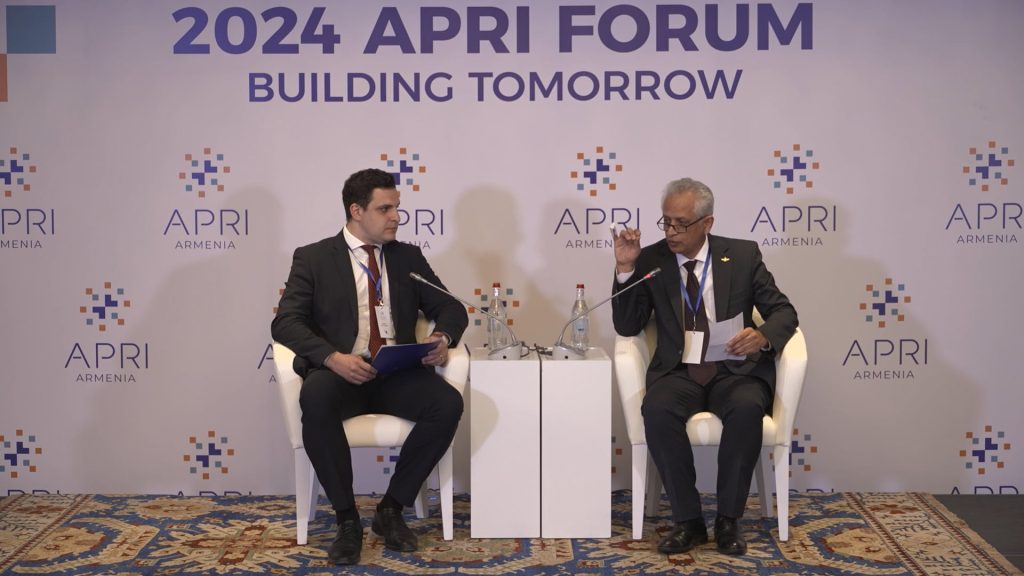
APRI Armenia’s three-day Forum kicked off with in-depth discussions on the geopolitical challenges and opportunities facing Armenia and the region. Through engaging keynote addresses, fireside chats, and insightful panel discussions, we explored the basis of Armenia’s foreign policy strategy, navigated the security complexities of a changing world order, and unpacked some of the most promising diplomatic opportunities Armenia can offer. The day featured dedicated sessions examining bilateral relations and a forward-looking exploration of environmental diplomacy and building a sustainable future.
Day 2 examined Armenia’s economic future and opportunities for sustainable prosperity. Inspiring examples of successful economic transformations from other countries were explored, with discussions focusing on how Armenia can attract significant investments and improve its infrastructure. Critical issues such as sustainable farming practices, clean energy solutions, and digital adaptation were also addressed. The afternoon broadened the conversation to encompass the environment, health, transportation, and artificial intelligence, reflecting a holistic perspective on Armenia’s future possible development. We wrapped up Day 2 with an inspirational intervention on creating a vibrant entrepreneurial culture in Armenia.
The final day of our conference turned its focus toward Armenia’s long-term strategic development and its people. It explored public opinion on the country’s political journey, examine key bilateral relationships, such as with India, Saudi Arabia, and Russia, and analyze critical security considerations in a changing world. Additionally, the day featured discussions on building a future-proof workforce through education and international partnerships, along with sessions exploring the future of the Armenians of Nagorno-Karabakh and empowering Armenia’s regional communities.
Quotes that inspired us:
“We, friends, are the heirs of a people with a culture dating back a millennium. We have an honorable and unique place in the history of human civilization. In the thread of the centuries, our national culture triumphed despite the difficulties and even the most extreme conditions have not been able to break that chain.” Zabel Yesayan
“Yesterday is not ours to recover, but tomorrow is ours to win or lose.” Lyndon B. Johnson
“If I can’t make it through one door, I’ll go through another door—or I’ll make a door. Something terrific will come no matter how dark the present.” Rabindranath Tagore
Forum Agenda
9:00
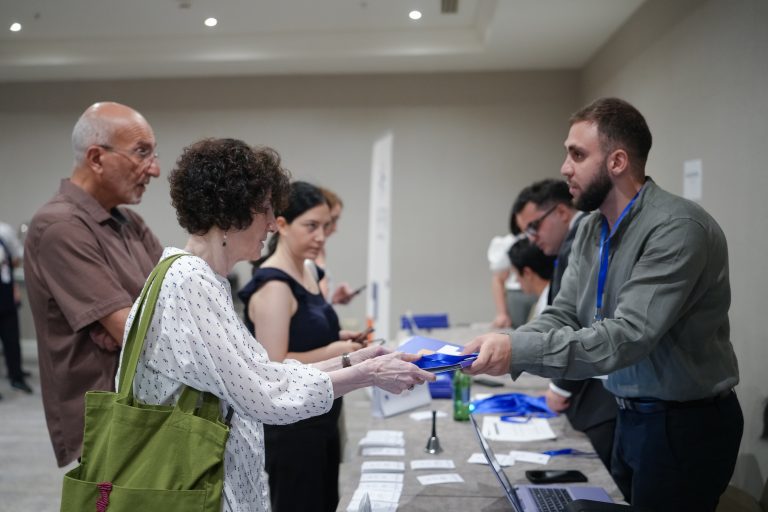
Registration
9:25
Words of Welcome
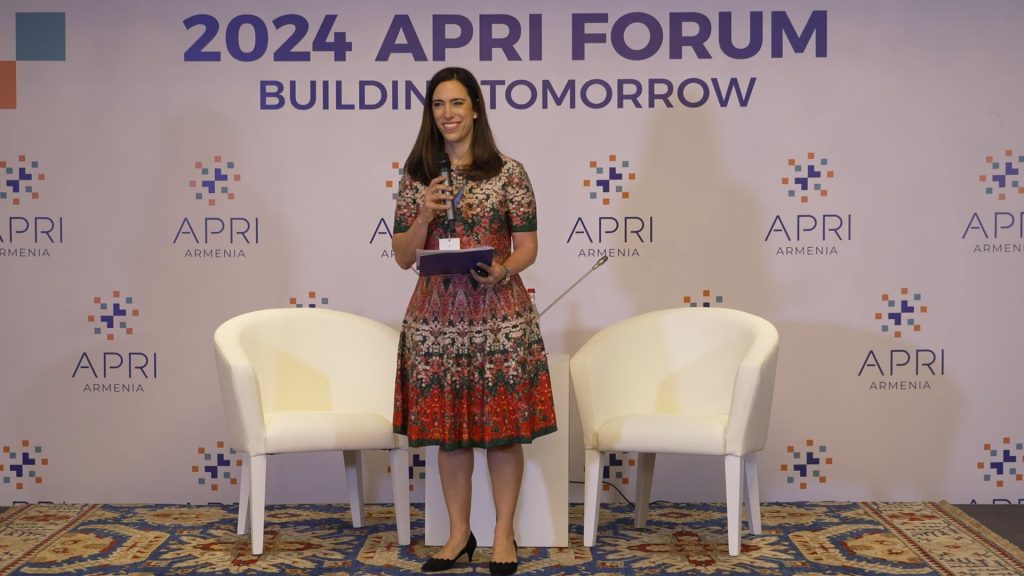
- Lara Setrakian, President, APRI Armenia
9:30
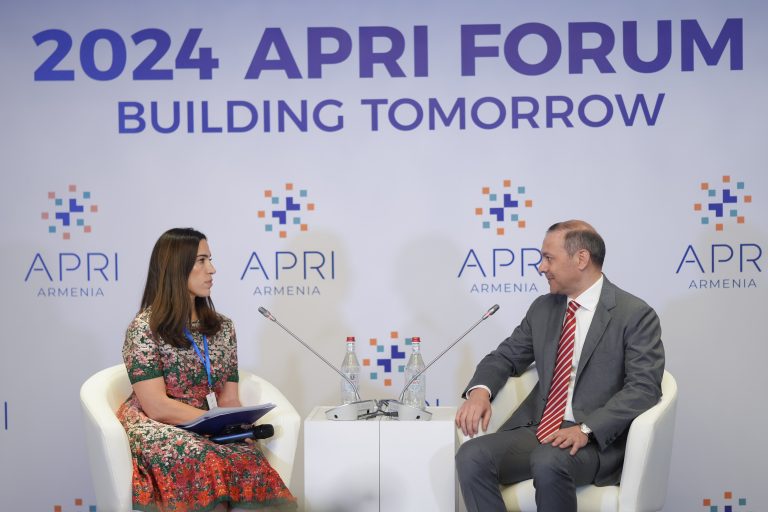
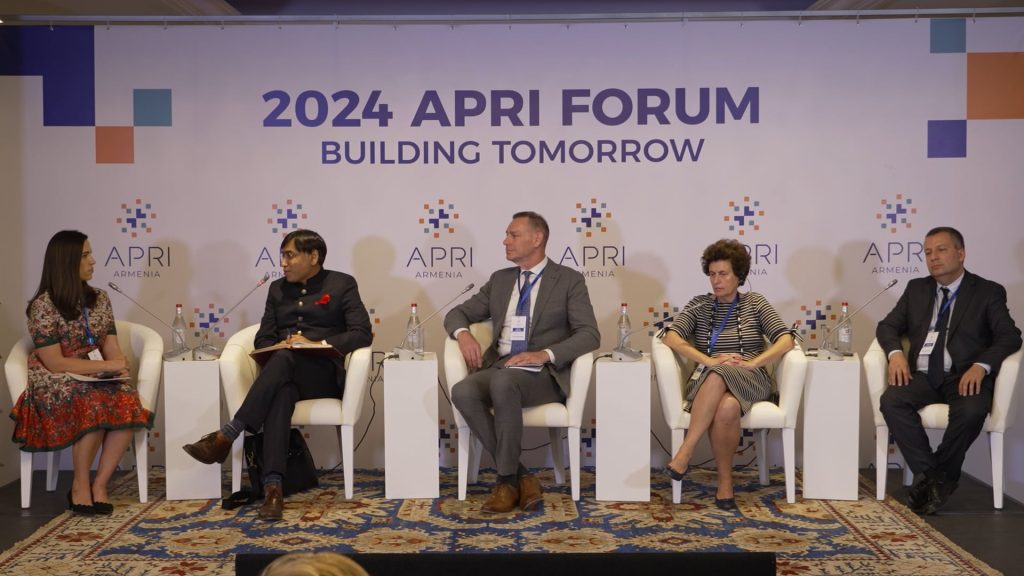
Module: Armenia’s Strategic Diversification in a Changing World Order
The Republic of Armenia is undergoing its most important geopolitical shift since independence, engaging new country partners and building a new matrix of dependencies in the political, diplomatic, and military spheres. This opening session of the 2024 APRI Forum will draw on regional and international perspectives to provide attendees with a comprehensive understanding of Armenia’s strategic priorities. It will also shed light on the opportunities and challenges that lie ahead for peace and stability in the South Caucasus.
Keynote
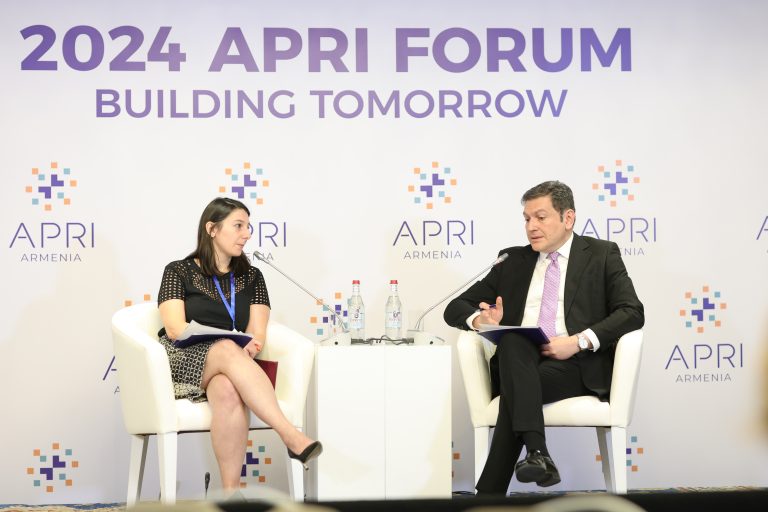
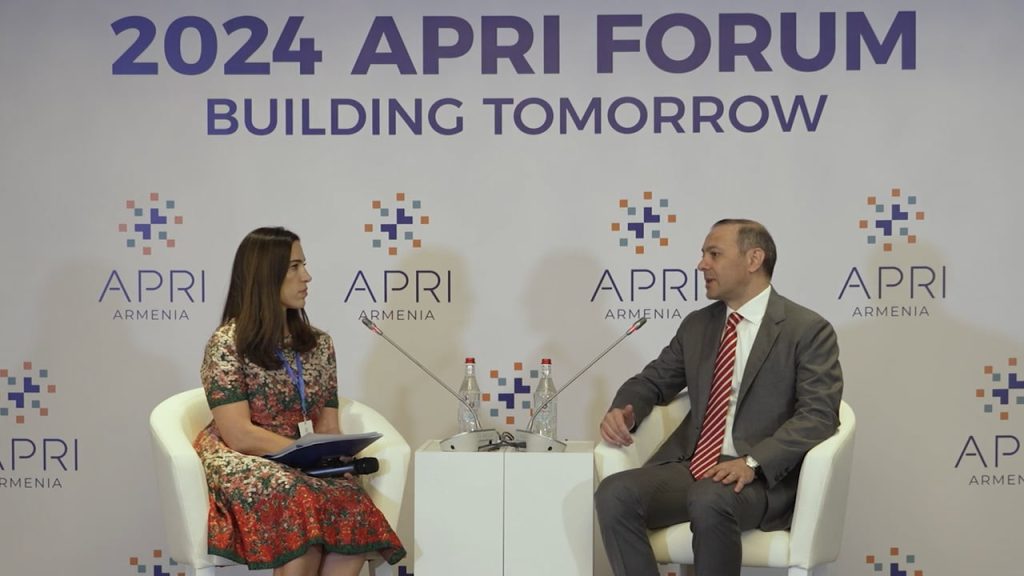
- Armen Grigoryan, Secretary, National Security Council of Armenia
- Moderator: Lara Setrakian, President, APRI Armenia
Panel Discussion
- Despoina-Ino Afentouli, Executive Director, Institute of International Relations Colonel (Retired)
- Robert E. Hamilton, Head of Eurasia Research, Foreign Policy Research Institute
- Abhinav Pandya, Founder, Director and CEO, Usanas Foundation
- Benyamin Poghosyan, Senior Research Fellow, APRI Armenia
- Moderator: Lara Setrakian, President, APRI Armenia
10:45
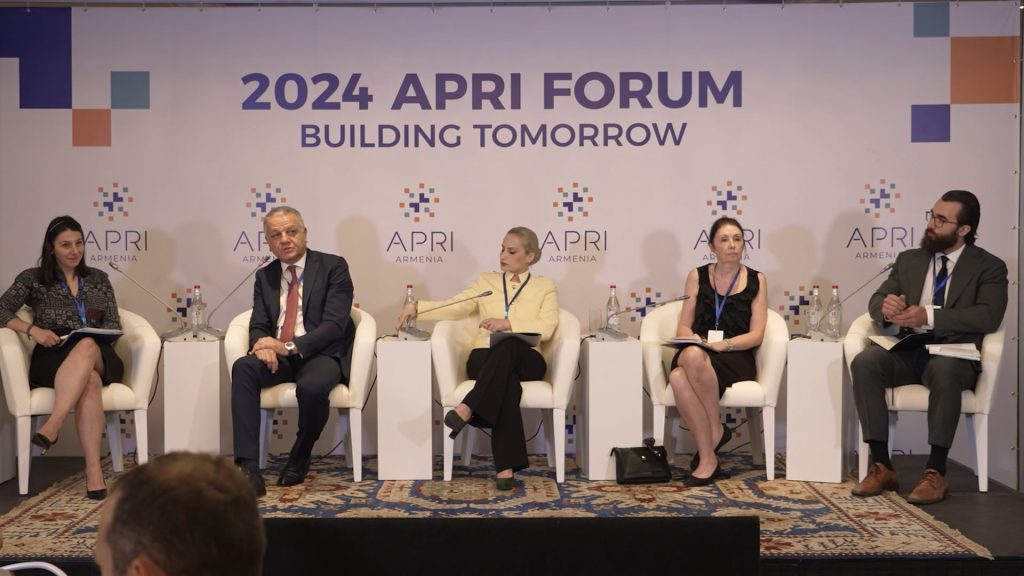
Expanding Engagement and Testing the Limits of EU–Armenia Relations
Pledges of support and expansion of ties between the European Union and Armenia have publicly intensified over the past year, up to the point of open statements by Armenian o·cials around potential candidate status for EU accession. What are the opportunities and limitations of the EU’s engagement with Armenia? How do they align with its foreign policy vision for the South Caucasus?
- H.E. Vassilis Maragos, Ambassador of the EU to Armenia
- Armine G. Margaryan, President and Founder, Women and Global Security Architecture
- Stefan Meister, Head of the Center for Order and Governance in Eastern Europe, Russia, and Central Asia, German Council on Foreign Relations
- Amanda Paul, Deputy Head of Europe in the World Programme and Senior Policy Analyst, European Policy Centre
- Hugo von Essen, Analyst, Stockholm Centre for Eastern European Studies
- Moderator: Anahide Pilibossian, Vice President of Strategy and Development, APRI Armenia
11:30
Coffee Break
12:00
How to Harness Technology for the Good of Tomorrow
Jimmy Wales, the founder of Wikipedia and one of the luminaries of the modern internet, shares his thoughts about building tomorrow through the emergence of artificial intelligence and advanced technologies and how they might shape our world. How can we harness the best of technology to build the future while avoiding the dangers it poses to our humanity?
- Jimmy Wales, Founder, Wikipedia
- Moderator: Lara Setrakian, President, APRI Armenia
12:30
Advancing Environmental Diplomacy:
Partnerships for a Sustainable Future
Co-hosted with the AUA Acopian Center for the Environment
In addressing the urgent global challenges posed by the climate crisis, the rapid loss of biodiversity, excessive freshwater consumption, and the pervasive threat of hazardous chemical pollution, nations must forge innovative partnerships and draw on the experiences of peers worldwide. This panel discussion examines how countries are cultivating these crucial alliances and making environmental issues a cornerstone of their foreign policy. By examining how environmental diplomacy can resolve conflicts and reshape international relationships, the discussion will explore the transformative potential of such cooperation in advancing a sustainable, shared future.
- H.E. Nilakshi Saha Sinha, Ambassador of India to Armenia
- Moderator: Alen Amirkhanian, Director, Acopian Center for the Environment,
American University of Armenia
13:00
Networking Lunch & Musical Guests
14:00
Future Security: The New Formula for Defense and Deterrence
In the South Caucasus, as in many parts of the world, the old formula for maintaining security has been undone by geostrategic shifts in power and declining global norms of behavior. What new rules of order are rising to replace the old ones? How will emerging technologies and the changing nature of warfare impact peace and stability? What strategies will every country need to adopt to achieve future security? Experts will discuss evidence-based approaches and innovative technologies that are transforming national and international security frameworks, touching upon cyber defense, advanced military technologies, and the integration of traditional and nontraditional security measures.
- Ashot Ghukasyan, CEO, Bootech
- Tigran Hovhannisyan, Director, Independent Center for Defence Studies Manu Pubby, Senior Editor, The Economic Times
- Lieutenant General Arun Sahni, Distinguished Fellow, CLAWS and Strategic Advisor, TATA Group
- Moderator: Leonid Nersisyan, Senior Research Fellow, APRI Armenia
14:45
Strengthening Armenia’s Security: Reflecting One Year On
Colonel Zhirayr Amirkhanyan returns to the APRI Forum to reexamine initiatives to enhance Armenia’s security. Topics will include military modernization, cybersecurity measures, and regional security collaborations. The session will focus on strategic approaches, practical solutions, and emerging reforms that are setting the direction for Armenia’s national security policies.
- Colonel Zhirayr Amirkhanyan, Assistant to the Chief of General Sta, Ministry
of Defense, Republic of Armenia - Moderator: Leonid Nersisyan, Senior Research Fellow, APRI Armenia
15:15
Forging New Country Partnerships: The Path Forward
Over the past year, Greece, India, France, and Armenia have engaged in cross-cutting
conversations that have opened the door to higher levels of cooperation. Where
has this begun to bear fruit? Where could it lead next in bilateral and multilateral
formats for collaboration?
- Despoina-Ino Afentouli, Executive Director, Institute of International Relations
- Colonel Bruno Cunat, Deputy Head of the Europe, North America, and Multilateral Action Department, Direction Générale des Relations Internationales et de la Stratégie
- Leonid Nersisyan, Senior Research Fellow, APRI Armenia
- Lieutenant General Arun Sahni, Distinguished Fellow, CLAWS and Strategic Advisor, TATA Group
- Moderator: Anahide Pilibossian, Vice President of Strategy and Development, APRI Armenia
16:00
Coffee Break
16:30
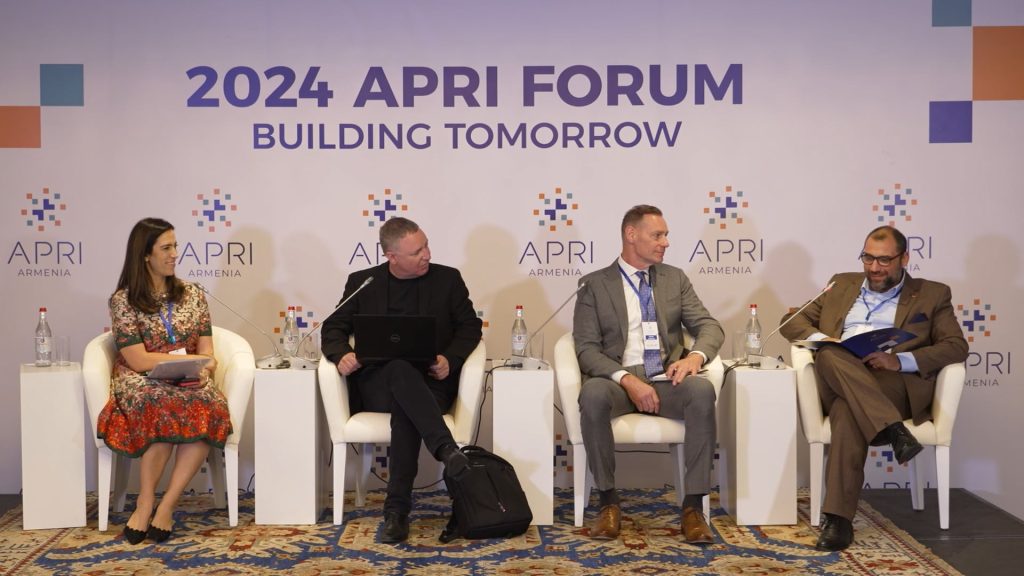
Assessing US–Armenia Relations in a Second (Trump or Biden) Term
Presidents Joe Biden and Donald Trump have adopted dramatically dierent approaches to US engagement in the South Caucasus. In contrast to the isolationist policy orientation of the Trump years, Biden’s first term has seen more intensive engagement and a more active response to conflict flare-ups. What have we learned from the past eight years and what does it mean for a second Biden or Trump presidency? What will be the role of the United States in regional aairs, in either scenario?
- Colonel (Retired) Robert E. Hamilton, Head of Eurasia Research, Foreign Policy Research Institute
- Dan Perry, Managing Partner, Thunder11
- Eugene Rumer, Senior Fellow and Director, Carnegie’s Russia and Eurasia Program
- Moderator: Lara Setrakian, President, APRI Armenia, and Verej Isanians,
Senior Editor, APRI Armenia
16:30
Assessing US–Armenia Relations in a Second (Trump or Biden) Term
Presidents Joe Biden and Donald Trump have adopted dramatically dierent approaches to US engagement in the South Caucasus. In contrast to the isolationist policy orientation of the Trump years, Biden’s first term has seen more intensive engagement and a more active response to conflict flare-ups. What have we learned from the past eight years and what does it mean for a second Biden or Trump presidency? What will be the role of the United States in regional aairs, in either scenario?
- Colonel (Retired) Robert E. Hamilton, Head of Eurasia Research, Foreign Policy Research Institute
- Dan Perry, Managing Partner, Thunder11
- Eugene Rumer, Senior Fellow and Director, Carnegie’s Russia and Eurasia Program
- Moderator: Lara Setrakian, President, APRI Armenia, and Verej Isanians,
Senior Editor, APRI Armenia
17:15
What Armenia Wants (from the US)
Given Armenia’s current aspirations, what are the country’s strategic priorities and expectations in its relationship with the United States? How can Armenia benefit from deeper economic ties, enhanced security cooperation, and increased diplomatic support from the US? With that in mind, what can Washington realistically deliver under a second Trump or Biden presidency?
- Areg Kochinyan, President, Research Center on Security Policy
- Moderators: Lara Setrakian, President, APRI Armenia
17:30
Nagorno-Karabakh: The Aftermath and the Path Forward
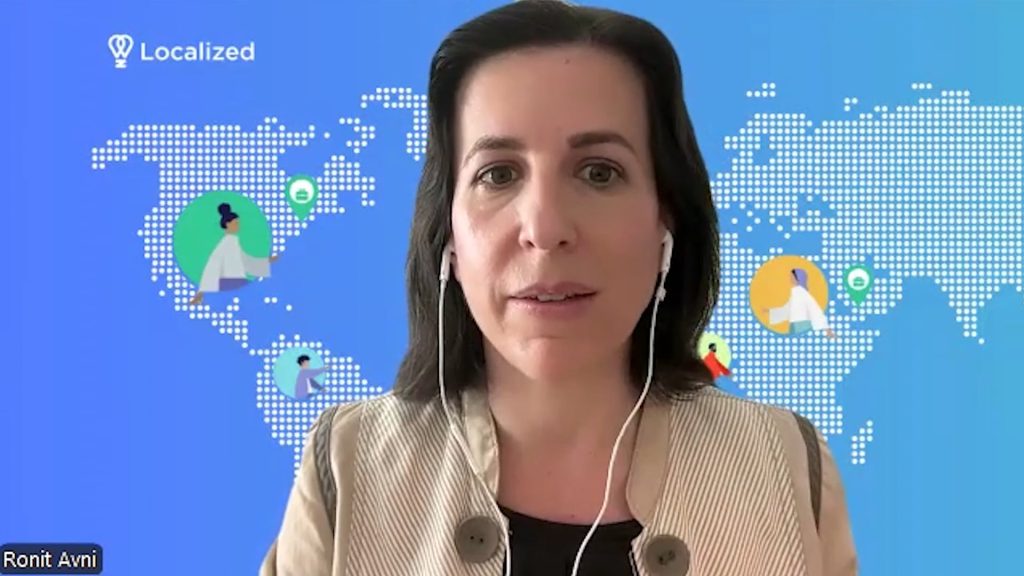
Localized is one of the world’s top startups for preparing workers for the jobs of the future. It began by bridging experts in the diaspora with their home countries to share their professional wisdom—a model of “knowledge remittances”—giving young people a head start in their careers and helping the economic development of their countries of origin. How can such a model support the prosperity and talent force of Armenia today? What can it teach us about the future of eective Armenia–diaspora collaboration?
- Ronit Avni, Founder and CEO, Localized
- Moderator: Hayk Margarian, Chair of the Trade and Investment Commission, International Chamber of Commerce National Committee Armenia
9:00
Registration
9:30
Education for the Future of Armenia
What could new roads, railways, and other connectivity projects mean for the region? On what terms and with what aims will they be developed? What would this new form of interstate cooperation mean for peace and stability? Our panel of experts will analyze the various factors shaping regional connectivity in the coming years.
- Larisa Hovannisian, Founder and CEO, Teach For Armenia
- Moderator: Lara Setrakian, President, APRI Armenia
10:00
Assessing the Crossroads of Peace:
Armenia’s Future in Trade, Transport, and Supply Chains
Armenia aims to be a bigger part of the global value chain in trade, transport, and economic production. How can an initiative such as the Crossroads of Peace and other elements of connectivity achieve this objective? What is Armenia’s part in the International North–South Transport Corridor (INSTC) and how can it be maximized to its fullest potential?
- Gagik Aghajanyan, CEO, Apaven
- Hrant Mikayelyan, Director, Armenian Research Institute Dinkar Prakash Srivastava, Independent Scholar and Advisor on Oil, Gas, LNG, Port and Connectivity Issues
Samuel Doveri Vesterbye, Managing Director, European Neighbourhood Council - Moderator: Lara Setrakian, President, APRI Armenia
10:45
Coffee Break
11:15
The Security of Small States and Middle Powers in a Changing World Order
How can small states survive and thrive in the coming decades as the global security order goes through an uncertain transformation? Through the lens of geopolitics, diplomacy, and strategic studies, we examine how countries such as Armenia can maintain their stability in a turbulent world.
- Paruyr Hovhannisyan, Deputy Foreign Minister, Ministry of Foreign Aairs, Republic of Armenia
- Ambassador Rainer Rudolph, Vice-Chairman, Munich Security Conference
- Moderator: Anahide Pilibossian, Vice President of Strategy and Development, APRI Armenia
12:00
Responsible Mining: Can it Fuel Armenia’s Growth?
What is the role of responsible mining in Armenia’s economic development? How can the mining sector contribute to growth while adhering to environmental and social standards? The conversation will cover best practices in sustainable mining, regulatory frameworks, and community engagement, explaining how Armenia can balance economic benefits with responsible practices, ensuring that mining activities support long-term prosperity and sustainability. The session aims to provide actionable recommendations for integrating responsible mining into Armenia’s broader economic strategy.
- Artyom Geghamyan, Executive Chairman, International Chamber of Mines of
Armenia - Moderator: Lara Setrakian, President, APRI Armenia
12:15
Creating a Country Turnaround: How Can We Solve Complex Problems?
Bernise Ang, from her posts at Zeroth Labs and the National University of Singapore, helps emerging countries tackle some of their most complex and hard-to-solve problems. Her hands-on experience at the intersection of systems change and global development provides rare insight into creating a better future, leveraging each country’s potential to survive and thrive in a fast-changing world.
- Bernise Ang, Chief Alchemist, Zeroth Labs
- Moderator: Tatiana der Avedissian, Head of Business Development, World Ocean Initiative, The Economist Group
12:45
13:45
Public Administration Reform: A Global View
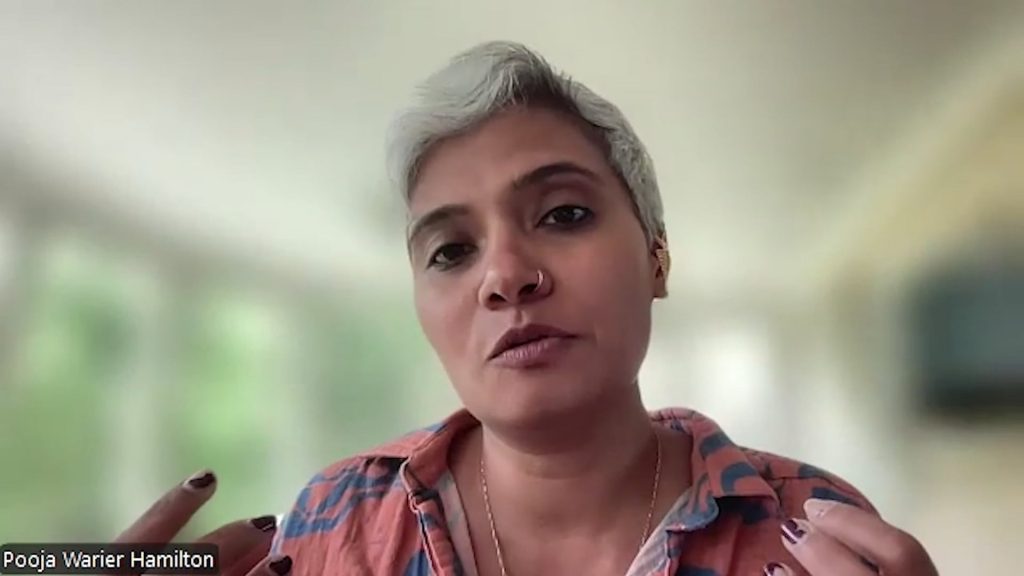
How can we improve government performance on a large scale? Apolitical is a platform that aims to do just that—a network of public servants from more than 160 countries, exchanging ideas and best practices for government excellence. It is also a teaching tool that enables public servants around the world to take part in executive courses on government reform, the role of artificial intelligence (AI), and emerging technology, digitization, and innovation in the public sector. Pooja Warier Hamilton, one of the senior team leaders at Apolitical, shares what they are seeing at the cutting edge of public-sector work.
- Verej Isanians, Senior Editor, APRI Armenia
- Pooja Warier Hamilton, Chief Partnerships O·cer, Apolitical
- Moderator: Lara Setrakian, President, APRI Armenia
14:15
Our Electric Future: Clean Cars, Clean Energy, and Beyond
Co-hosted with the AUA Acopian Center for the Environment
Armenia has been steadily ramping up solar energy production to transition to a sustainable future. From electric cars to more clean energy initiatives, where does this lead to next? Experts will discuss the advances in e-mobility and the infrastructure needed to support these developments. The conversation will highlight Armenia’s potential for adopting these technologies, the environmental and economic benefits, and the challenges that must be addressed to achieve a greener, more sustainable Armenia.
- Karen Arabyan, Energy Lead, Amber Capital Armenia; CEO, Solis
- Nelli Malyan, CEO, Team Systems
- Hayk Shekyan, Founder and CEO, Shtigen Group of Companies; Chairman, Armenia–India Business Council
- Moderator: Alen Amirkhanian, Director, Acopian Center for the Environment, American University of Armenia
14:45
Agricultural Transformation: Planting the Seeds of Tomorrow
Co-hosted with the AUA Acopian Center for the Environment
What is the role of agriculture in Armenia’s economic and environmental transformation? How can it enhance national resilience and food security? Agricultural growth has been stagnant, even declining in certain parts of Armenia, and the country remains far from self-su·cient in food production. Given the benefits and growth opportunities that lie ahead, what is the path forward for the agriculture sector?
- Vahe Keushguerian, Founder and CEO, WineWorks
- Vardan Urutyan, Team Lead and Component Coordinator, International Center for Agribusiness Research and Education Armenia
- Raffi Vartanian, Co-founder and CEO, Ziba Foods
- Moderator: Alen Amirkhanian, Director, Acopian Center for the Environment, American University of Armenia
15:30
Module: Building AI as Armenian Intelligence: How Far Can a Digital Armenia Go?
In his keynote remarks, Armenia’s Minister of High Tech Industry, Mkhitar Hayrapetyan, explores the transformative potential of artificial intelligence (AI) in establishing Armenia as a leading digital nation. The panel discussion afterward will highlight strategic initiatives, innovative projects, and policy frameworks to
foster AI-driven innovation and digital growth. Participants will examine the opportunities and challenges of building a robust AI ecosystem and how Armenia can leverage these advances to drive economic development, enhance public services, and secure its place in the global digital landscape.
Keynote
- Mkhitar Hayrapetyan, Minister, Ministry of High-Tech Industry, Republic of Armenia
- Moderator: Lara Setrakian, President, APRI Armenia
Panel Discussion
- Ashot Arzumanyan, Partner, SmartGateVC
- Harut Martirosyan, CTO, Intent.ai
- Suzanna Shamakhyan, Vice President, Foundation for Armenian Science and Technology (FAST)
- Moderator: Raffi Kassarjian, CEO and Principal Advisor, Sensyan
16:30
Coffee Break
17:00
What Armenians Want: Reading Today’s Polls about Building Tomorrow
Drawing upon detailed data analysis and relevant fieldwork, some of Armenia’s leading research practitioners share the trends, ideas, and indicators that clarify how citizens think about their country’s future. What are they seeing from the surveys and data-driven approaches to realizing Armenia’s fullest potential?
- Artak Shakaryan, Senior Program Manager, International Republican Institute
- Tigran Tshorokhyan, Manager, UNDP Innovation and SDG Finance Portfolio
- Moderator: Vache Gabrielyan, Dean, Manoogian Simone College of Business and Economics, American University of Armenia
17:30
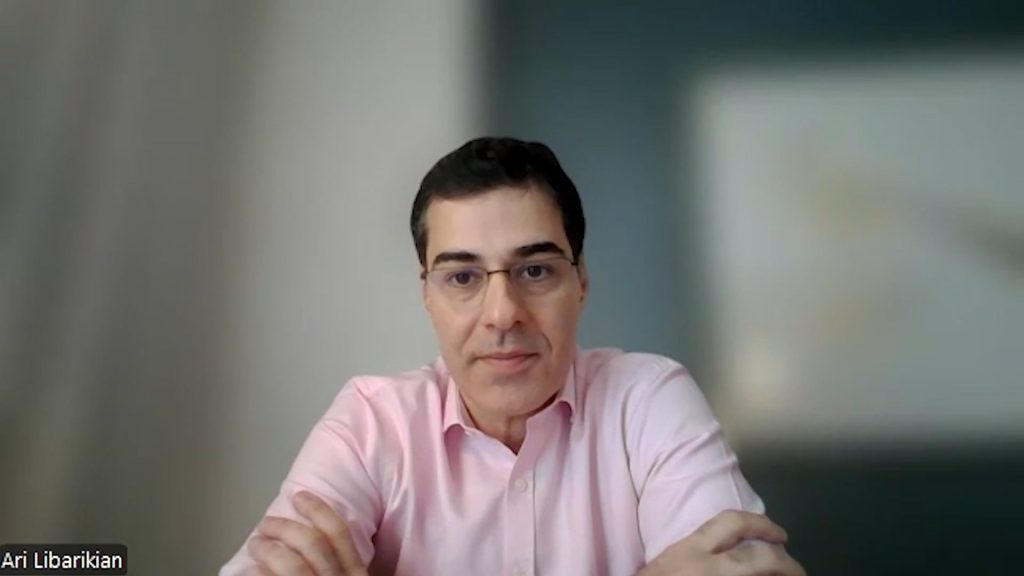
Managing Digital Transformations
Ari Libarikian, Senior Partner at McKinsey & Company and global co-leader of the firm’s Digital Practice, is a specialist in digital transformation and creating innovation within long-running legacy systems. In this session, he shares strategies for success that have guided companies, governments, and cutting-edge organizations in shaping their digital futures.
- Ari Libarikian, Senior Partner, McKinsey & Company
- Moderator: Verej Isanians, Senior Editor, APRI Armenia
9:00
Registration
9:30
The Future of Armenia–Turkey Relations
The process of diplomatic normalization between Turkey and Armenia has been a long and winding road, largely shaped by the foreign policy outlook set in Ankara. Experts will discuss the historical context of Turkey–Armenia relations, recent developments, and prospects for the bilateral relationship, in the context of the South Caucasus at large.
- Mustafa Aydin, President, International Relations Council, Turkey
- Vazgen Karapetyan, Associate Director, Eurasia Partnership Foundation
- Moderator: Benyamin Poghosyan, Senior Research Fellow, APRI Armenia
10:00
Module: Russia–Armenia Relations: Reaching a New Set Point
After decades of Armenian dependence on Russia in the economic, political, and military spheres, Armenia’s ties with its longtime ally are in a period of flux. What will be the new size and shape of Armenia’s relationship with Russia? How will the two countries find a new set point? What format and degree of cooperation is productive for both countries? Two luminaries share their perspectives on this weighty topic.
Part I
- Sergey Markedonov, Senior Fellow, MGIMO University
- Moderator: Sergei Melkonian, Research Fellow, APRI Armenia
Part II
- Georgi Derluguian, Professor of Social Research and Public Policy, NYU Abu Dhabi
- Moderator: Benyamin Poghosyan, Senior Research Fellow, APRI Armenia
11:15
Coffee Break
11:45
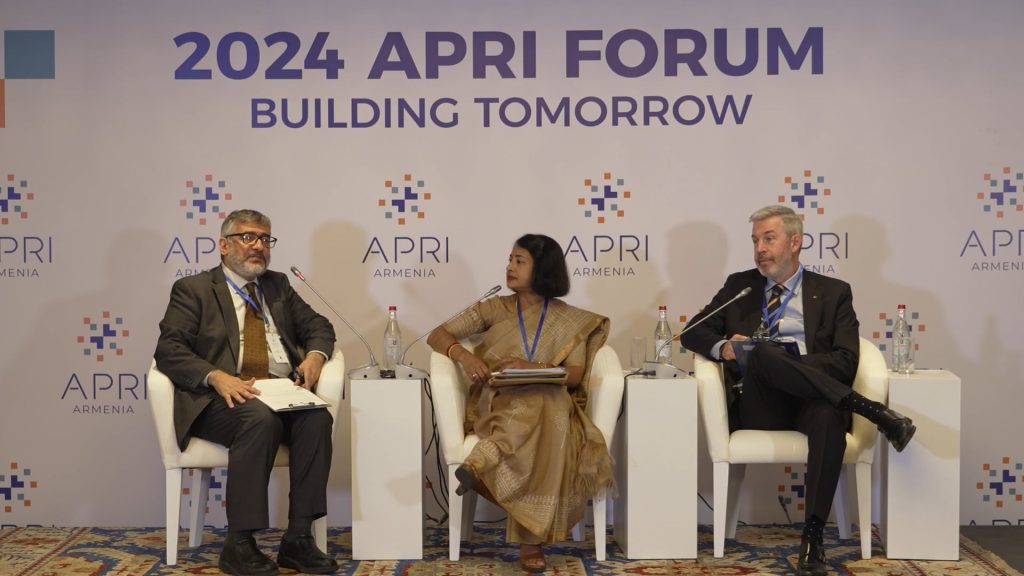
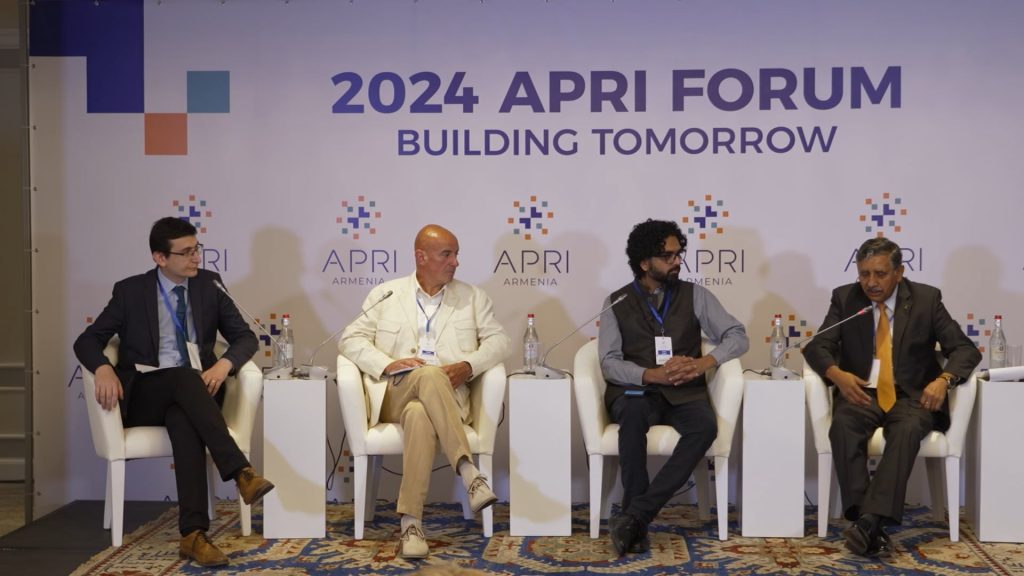
Building on the India–Armenia Moment(um)
Relations between India and Armenia have seen a dramatic upswing, with the establishment of high-level military and diplomatic ties. Economic and trade activity are set to follow. What do we need to understand about the direction and pace at which the India–Armenia partnership is growing? How does Armenia
fit into India’s foreign policy, its vision for the Global South, and its role in the world order to come?
- Apurv Kumar Mishra, Consultant, Economic Advisory Council to the Prime Minister, Government of India
- Karen Mkrtchyan, Executive Director, Armenia–India Business Council
- Abhinav Pandya, Founder, Director and CEO, Usanas Foundation
- Manu Pubby, Senior Editor, The Economic Times
- Moderator: Nvard Chalikyan, Research Fellow, APRI Armenia
12:30
India–Armenia Ties: The People-to-People Context
The winner of APRI Armenia’s inaugural India–Armenia Essay Contest shares her perspectives on enhancing people-to-people ties, bringing the centuries-old civilizational relationship into a modern, multifaceted era of collaboration.
- Khyati Singh, Research Associate, Centre for Air Power Studies
- Moderator: Nvard Chalikyan, Research Fellow, APRI Armenia
12:45
Networking Lunch & Extended Musical Presentation
13:45
Re(thinking) Foreign Policy: Saudi–Armenian Relations
Faisal Abbas, Editor-in-Chief of Arab News and one of Saudi Arabia’s leading public thinkers, will discuss the evolving dynamics of Saudi-Armenian relations, focusing on this bilateral relationship’s strategic, economic, and cultural dimensions. The discussion will cover recent developments in bilateral ties, potential collaboration areas, and the broader context of Saudi Arabia’s foreign policy. Considering regional geopolitics and mutual interests, the conversation will highlight how both countries can benefit from enhanced cooperation.
- Faisal J. Abbas, Editor-in-Chief, Arab News
- Moderator: Lynn Zovighian, Co-founder and Managing Director, The Zovighian Partnership
14:15
Armenia’s Relations with the Arab World
This session will examine the current and future prospects of Armenia’s relations with the Arab world. Experts will discuss the historical context, recent diplomatic initiatives, and economic partnerships that shape these interactions. The conversation will highlight opportunities for increased cooperation in trade, technology, education, and cultural exchange. Attendees will learn how Armenia can strengthen its ties with Arab countries, leveraging shared interests and mutual benefits to foster a more integrated and collaborative regional network.
- Tigran Bakaryan, Research Scientist, Centre for Scientific Innovation and Education, Institute of Mathematics
- Joseph A. Kéchichian, Senior Fellow, King Faisal Center for Research and Islamic Studies
- Armenak Tokmajyan, Research Fellow, Carnegie Middle East Center
- Moderator: Lynn Zovighian, Co-founder and Managing Director, The Zovighian Partnership
14:45
Understanding Iran’s View on the South Caucasus
The Islamic Republic of Iran remains a major actor in shaping strategic outcomes in the South Caucasus. What is Tehran’s perspective on recent events and ongoing talks between Armenia and Azerbaijan? How does Iran see itself in the region’s short- and long-term security architecture? What calculations guide Iran’s policies toward its neighbors to the north?
- Majid Karimi, Member, Peripheral Borders Studies Group, Caucasus, National Defense University of Iran
- Moderator: Sergei Melkonian, Research Fellow, APRI Armenia
15:15
Building Tomorrow’s Workforce Today
Armenia’s Minister of Labor and Social Aairs, Narek Mkrtchyan, shares the strategies that will prepare the country’s workforce to build prosperity for tomorrow. How can Armenia meet its urgent development priorities, supporting the most vulnerable in society while moving young and older adults into the high-skill economy?
- Narek Mkrtchyan, Minister, Ministry of Labor and Social Aairs, Republic of Armenia
- Moderator: Lara Setrakian, President, APRI Armenia
15:45
Coffee Break
16:00
Module: Investible Armenia: FDI and Business for Sustainable Growth
Foreign direct investment (FDI) is vital to Armenia’s stability and economic prosperity in its next chapter. What has the country learned from its past experiences with FDI and how does that shape the way forward for its economic development? How can Armenia succeed in forming international partnerships for the growth areas and megaprojects that will be key to its future prosperity?
Fireside Chat
- Léa Hakim, Senior Country Economist for Armenia, World Bank
- Moderator: Patrick Elliott, Host, CivilNet
Panel Discussion
- Rafayel Gevorgyan, Deputy Chairman, State Revenue Committee
- Tigran Jrbashyan, Partner, Director of Management Advisory, Ameria Advisory
- Rafi Samardjian, Secretary General, International Chamber of Commerce National Committee Armenia
- Anushavan Simonyan, Managing Partner, Amber Capital Armenia
- Moderator: Lara Setrakian, President, APRI Armenia
17:00
Reflections from the EU Monitoring Mission in Armenia
Markus Ritter, Head of the European Union Mission in Armenia (EUMA), returns to the APRI Forum stage to reflect on lessons learned from operations in the field, as well as ongoing events and challenges on the Armenia–Azerbaijan border.
- Markus Ritter, Head, European Union Mission in Armenia
- Moderator: Anahide Pilibossian, Vice President of Strategy and Development, APRI Armenia
17:30
A Future for the Armenians of Nagorno-Karabakh
Leading civil society voices from Nagorno-Karabakh reflect on humanitarian aid and social development. What has been working and what are the opportunities to improve on current programs? How can we best support displaced communities and help populations, young and old, to achieve their highest potential?
- Yana Avanesyan, Community Manager, AGBU Learn to Earn Artsakh Program
- Siranush Sargsyan, Independent Journalist
- Nina Shahverdyan, Teacher, Blogger, Civil Rights Activist
- Moderator: Kim Hekimian, Visiting Senior Fellow, APRI Armenia
Speakers
Community Guidelines
APRI Armenia is committed to creating an inclusive environment for dialogue in an atmosphere of mutual respect. Our duty and obligation is to maintain an exchange of ideas that is free from harassment, discrimination, and threatening or disrespectful behavior. We expect all speakers and participants to abide by these guidelines.
APRI Armenia reserves the right to refuse admittance to or remove any person from its events at any time. This includes, but is not limited to, attendees behaving in a disorderly manner or failing to comply with our community guidelines. We do not tolerate harassment of event participants in any form. We hope you will enjoy the company of the distinctive speakers, facilitators, and participants who attend our events. We convene in the spirit of mutual understanding and with an appreciation of what each individual brings to the whole conversation.APRI Armenia reserves the right to refuse admittance to or remove any person from its events at any time. This includes, but is not limited to, attendees behaving in a disorderly manner or failing to comply with our community guidelines. We do not tolerate harassment of event participants in any form.
We hope you will enjoy the company of the distinctive speakers, facilitators, and participants who attend our events. We convene in the spirit of mutual understanding and with an appreciation of what each individual brings to the whole conversation.
ARTISTS IN RESIDENCE
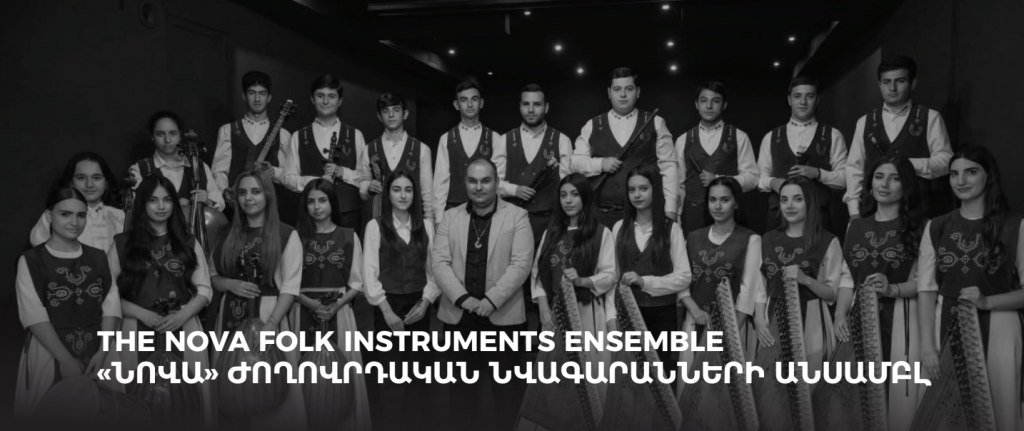
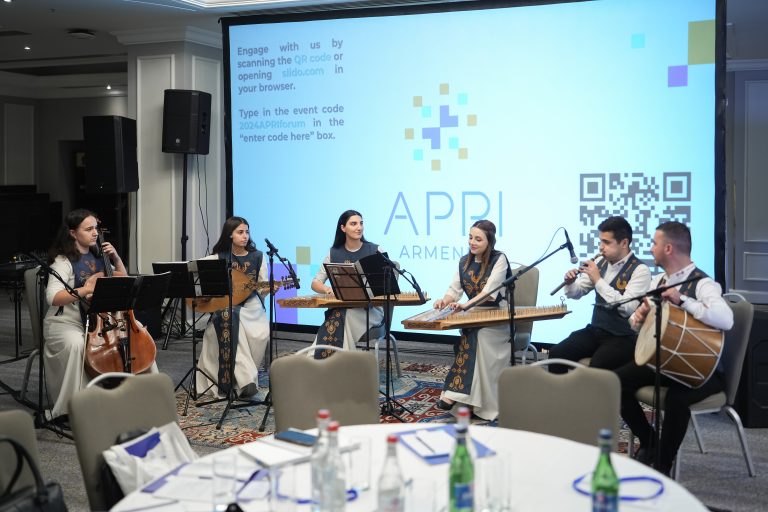
The Naregatsi Art Institute founded the Nova Folk Instruments Ensemble in September 2015 under the artistic supervision of RA Honorary Artist of Culture, tar player Hovik Sahakyan. The Nova Folk Instruments Ensemble’s mission is to give members of a younger generation the opportunity to experience traditional Armenian music and musical instruments, breathing new life into eorts to preserve and develop our national culture. Since 2020, the Artistic Director of the Nova ensemble has been celebrated shvi player Helbert Asatryan. The Ensemble consists of 22 young musicians playing Armenian folk instruments: qanun, santur, qyamancha, tar, oud, dhol, dap, duduk, shvi, blul, small bambirs, qamani. Its repertoire incorporates arrangements and transcriptions of folk melodies, ballads, and spiritual music. The Nova Folk Instruments Ensemble recorded its first CD, “Toward the Light,” in 2022.
Artistic Director։ Helbert Asatryan
Photo Gallery

















Session Recordings


Sponsors