Yerevan, Armenia
- June 15-17, 2022
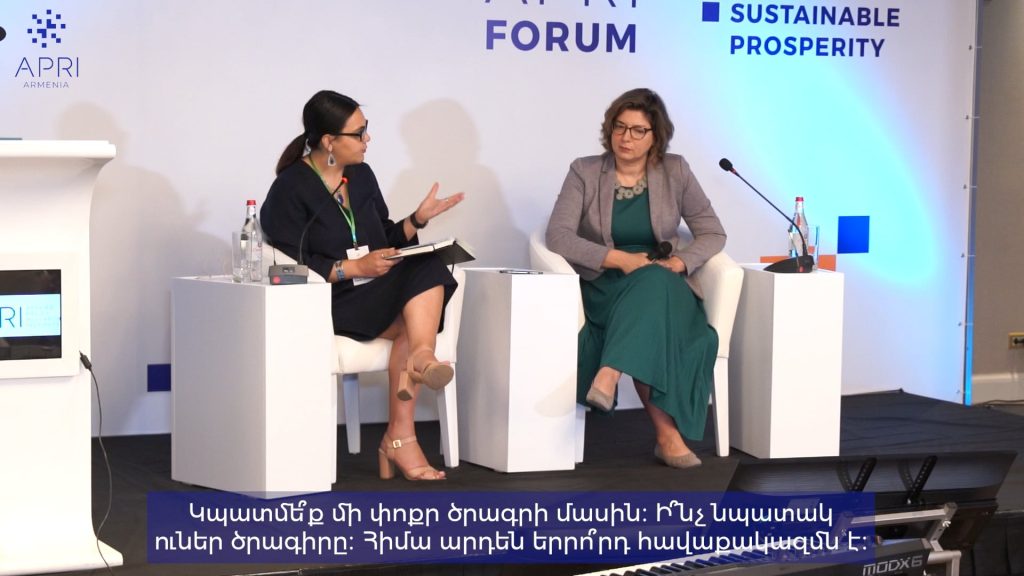
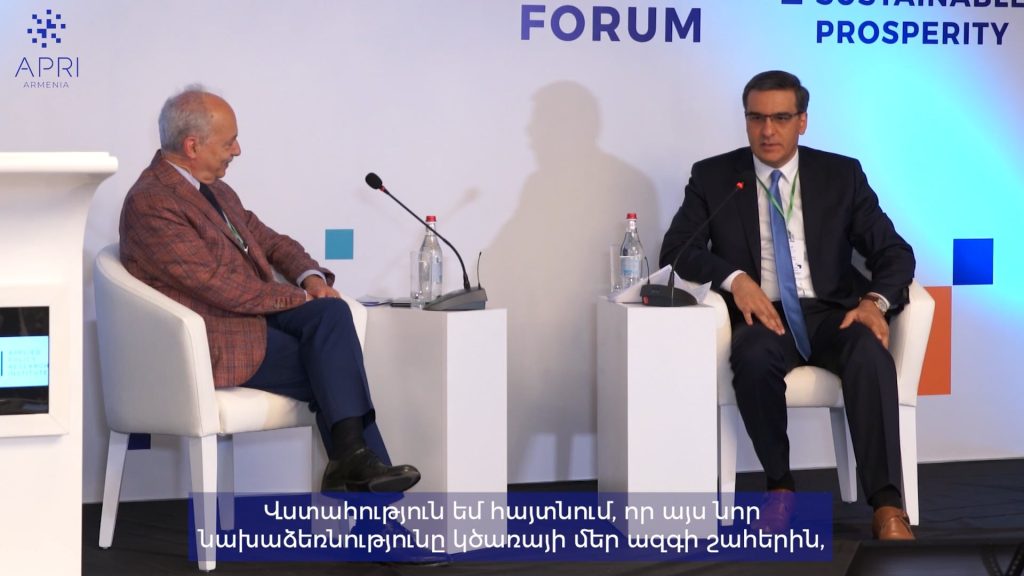
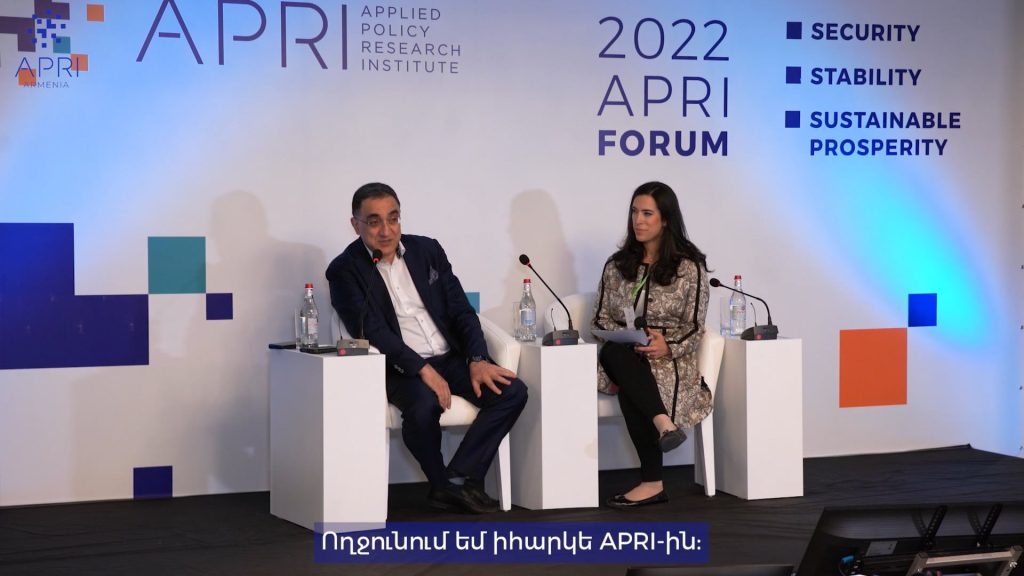
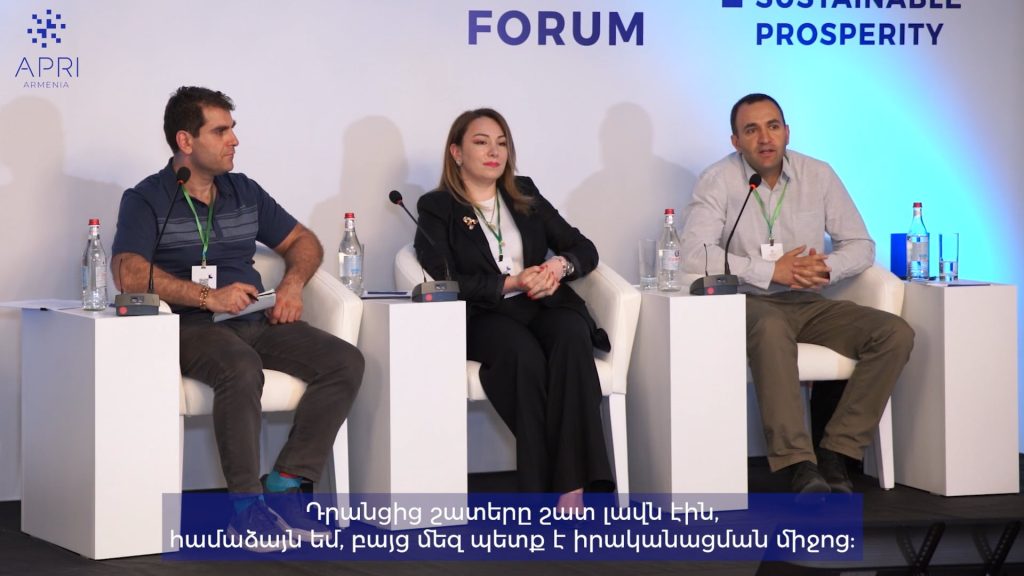
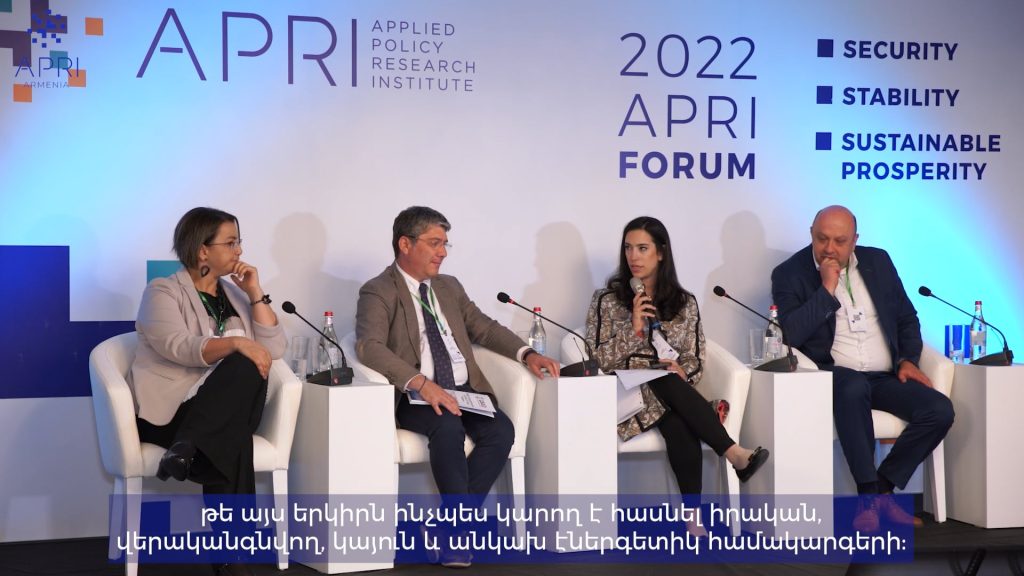
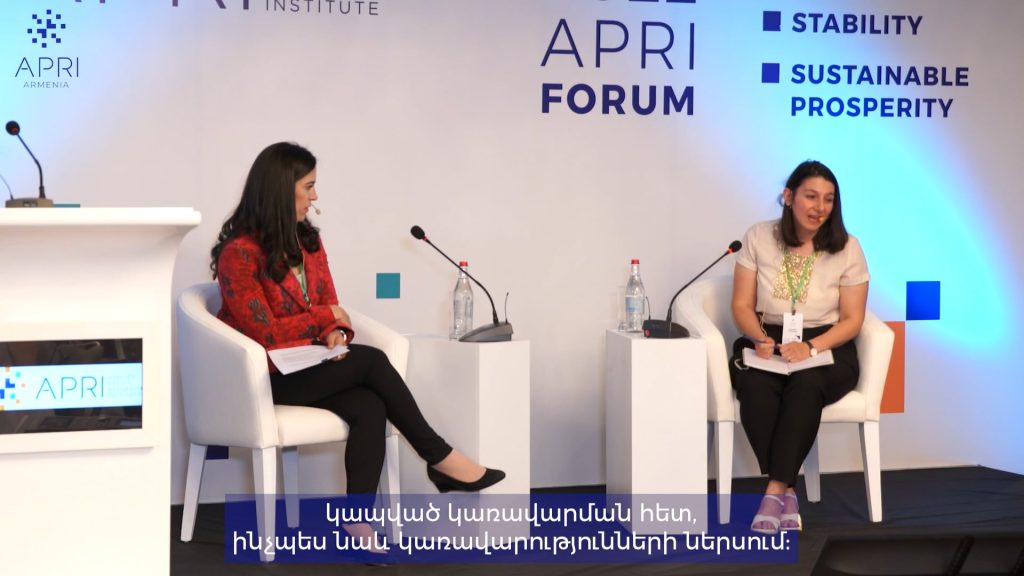
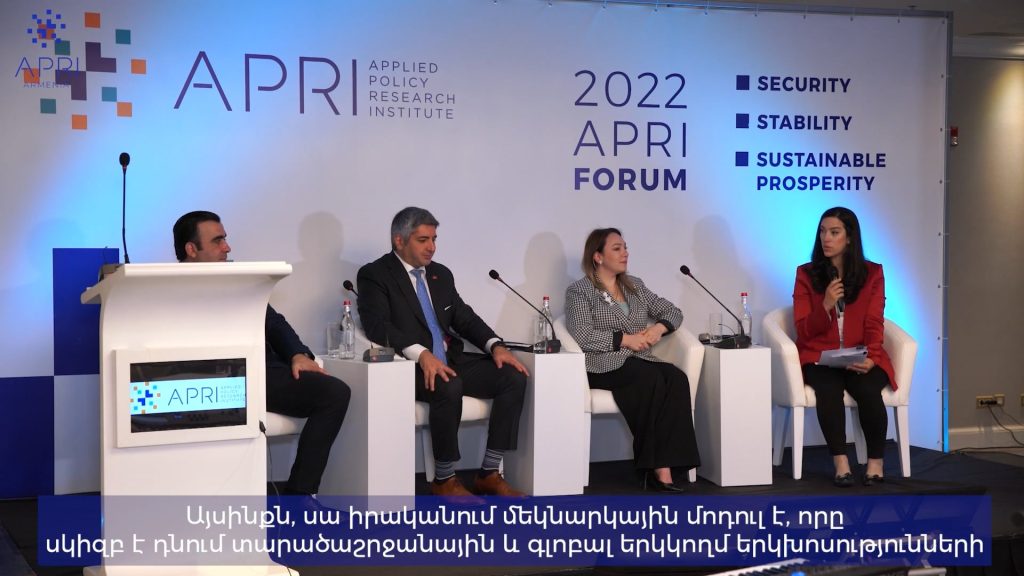
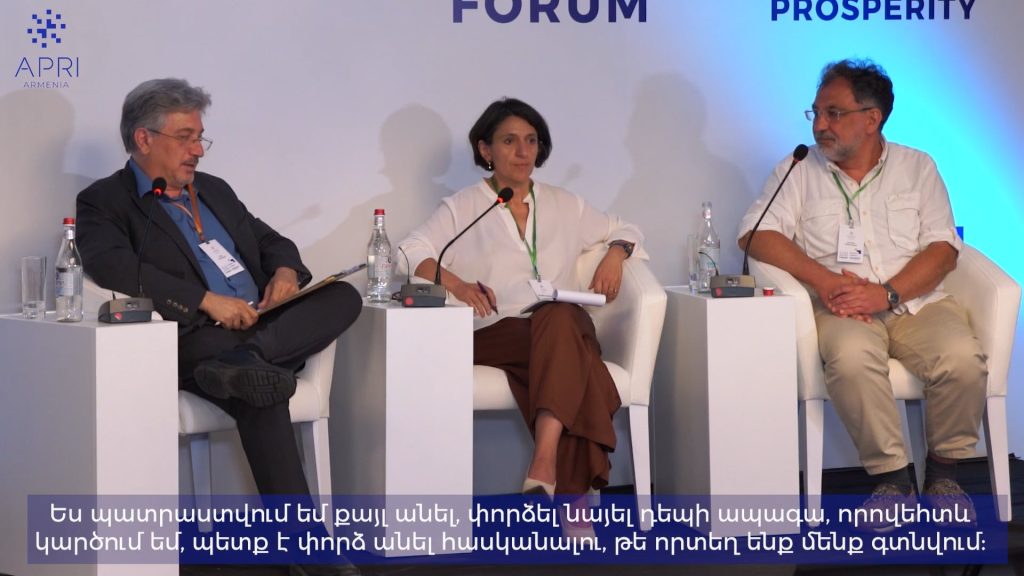
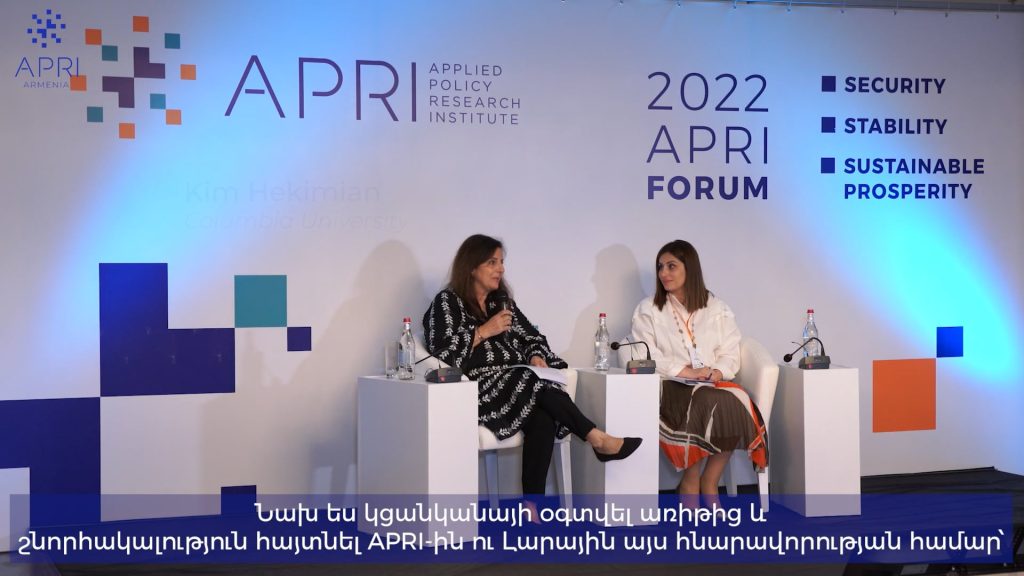
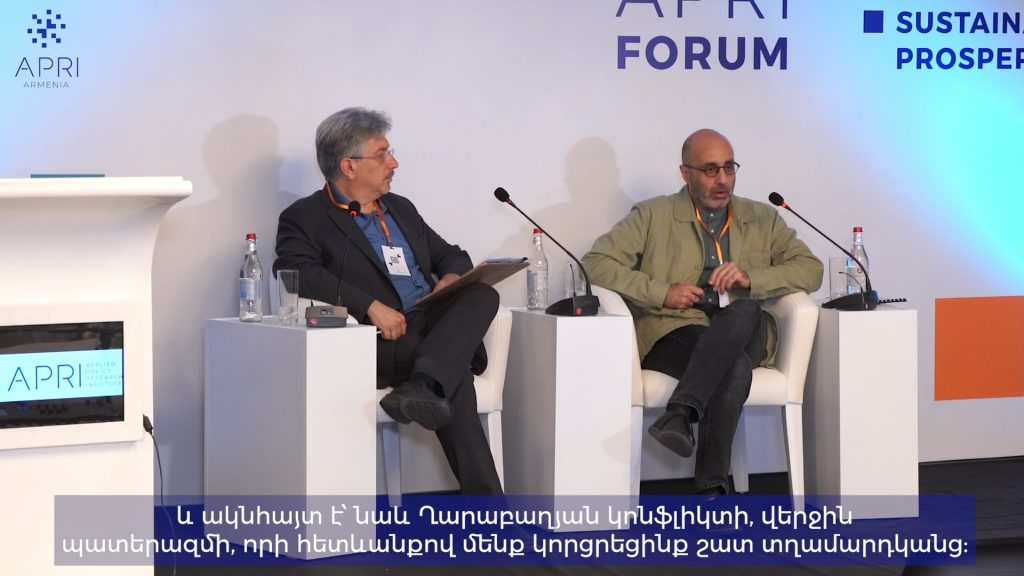
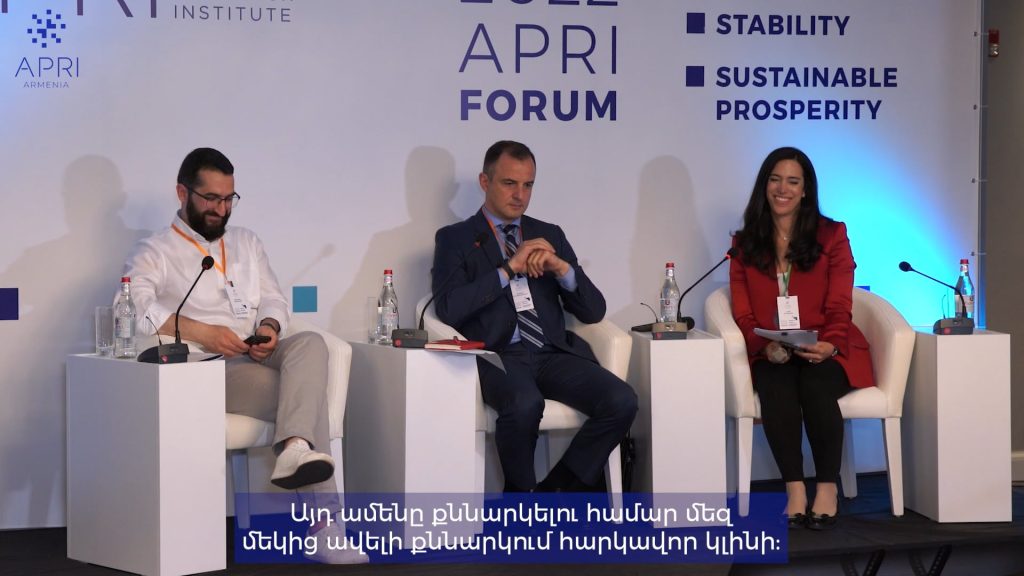
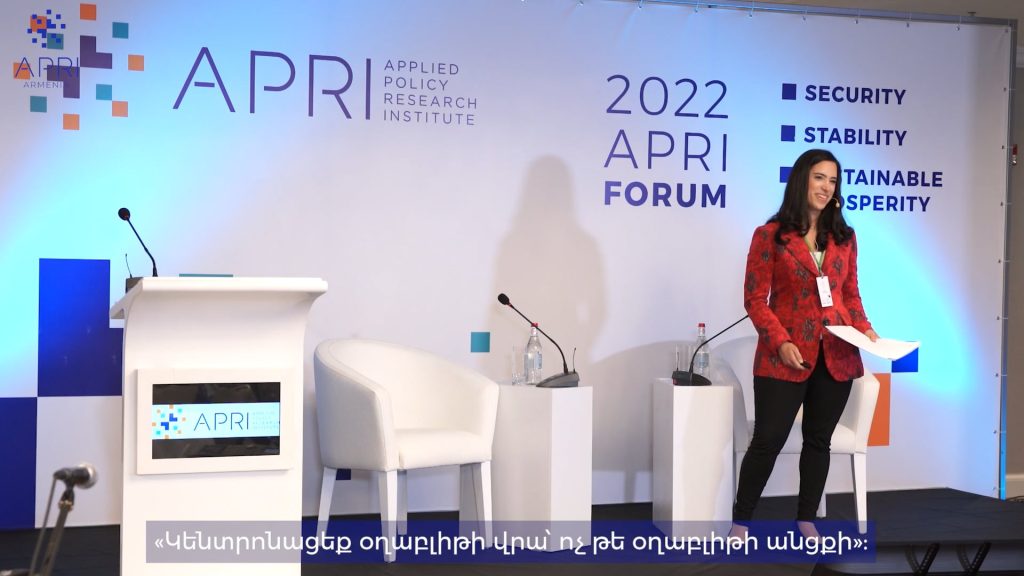
The APRI Forum: Security, Stability and Sustainable Prosperity was an invitation-only forum held in Yerevan from June 15–17, 2022. As the inaugural event of the Applied Policy Research Institute of Armenia (APRI Armenia), the forum brought together insightful thinkers from around the world for a series of vitally important discussions, with topics ranging from geopolitics and security to crisis leadership and national development.
Quotes that inspired us:
We don’t have the luxury of running away. Of hiding.
Because we have something very specific we’re trying to do.
We have an obstacle we have to lean into and transform.
No one is coming to save you.
If we’d like to go where we claim we want to go – to accomplish
what we claim are our goals – there is only one way.
And that’s to meet our problems with the right action.
Therefore, we can always (and only) greet our obstacles
with energy
with persistence
with a coherent and deliberate process
with iteration and resilience
with pragmatism
with strategic vision
with craftiness and savvy
and an eye for opportunity and pivotal moments.
When people ask where we are, what we’re doing, how the
“situation” is coming along, the answer should be clear:
We’re working on it.
We’re getting closer.
When setbacks come, we respond by working twice as hard.
Ryan Holiday
The Obstacle is the Way
Forum Agenda
11:30
Registration and Lunch
13:30
Opening and Welcome Sessions
14:30
Opening Keynote
- Martin Galstyan, Governor of the Central Bank of Armenia
- Moderator: Lara Setrakian, President, APRI Armenia
15:30
Working Together in the Age of Divisionr
In a highly polarized political atmosphere, how can different groups work together to tackle national challenges and find constructive solutions for a country’s development? How can people with different viewpoints and opinions build bridges of collaboration? In recent years, growing political polarization has been a key issue for countries around the world. This session will explore how to overcome those dynamics to build a more harmonious future.
- Arman Tatoyan, American University of Armenia
- Moderator: Yervant Zorian, Synopsys
16:30
Global Keynote: Skills for a 21st-Century Government
In today’s rapidly changing and increasingly complex world, governments must adopt new forms of leadership in order to tackle the challenges of the 21st century. This keynote session will address the “what” and the “how” of effective government, based on lessons learned from dozens of countries. Lisa Witter will share top insights from Apolitical, a platform she co-founded, where civil servants around the world share best practices for
better public administration.
- Lisa Witter, Apolitical
- Moderator: Anahide Pilibossian, BlackRock
- Moderator: Eric Hacopian, CivilNet
17:00
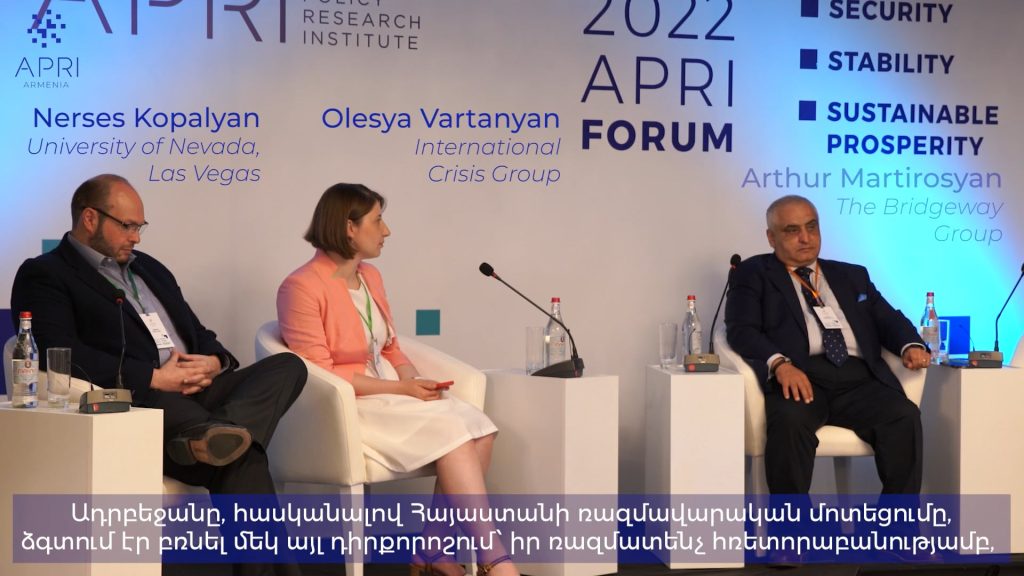
Peace/Negotiations: What Lies Beyond?
Even in the best of times, peace negotiations are a difficult process with complex dynamics that require deep trust and sensitivity, as well as a range of creative breakthrough ideas. This session will place regional peace negotiations in a wider historical context, exploring how other countries have navigated the road to peace and what can be learned from those cases.
- P. Terrence Hopmann, Johns Hopkins SAIS
- Arthur Martirosyan, The Bridgeway Group
- Olesya Vartanyan, International Crisis Group
- Nerses Kopalyan, University of Nevada, Las Vegas
- Moderator: Maria Titizian, EVN Report
18:00
Global Keynote: Decision Making in Times of Crisis
Much research has been carried out into the art and science of decision-making, using clear data and often complex mathematical models to make policy choices. How does that process change during a period of crisis? Through the eyes of a world-class professor of decision sciences, we will explore the questions we all must face for clear decision-making in uncertain times.
- Ioana Popescu, INSEAD
- Moderator: Lara Setrakian, Presidnet, APRI Armenia
- Moderator: Yervant Zorian, Synopsys
18:30
Closing Words
19:00
APRI Armenia Launch Reception at Point of View
9:00
Registration and Breakfast
10:00
Fireside Chat: Public Sector Innovation/Policy Entrepreneurship
Innovation is one of the keys to remaining competitive and successful in today’s world. Generating and implementing new ideas – or revolutionizing fields altogether – is an everlasting quest for policymakers and social entrepreneurs. This fireside chat will explore examples of policy innovation in Armenia – both successes and shortcomings – and how to pave the way forward for sustained progress.
- Sara Anjargolian, Impact Hub
- Moderator: Lusine Manukyan, APRI Armenia
10:30
Global Keynote: (Re)thinking Economic Development
Sustainable economic development is the key to realizing a country’s full productive potential and enhancing the lives of its citizens. There is still significant debate and research on how best to pursue economic growth in a way that benefits all members of society. This keynote session will take a close look at economic development models and what Armenia’s policymakers can do to advance national prosperity for all.
- Reuben Abraham, Artha Global
- Moderator: Erik Khzmalyan, Enterprise Armenia
11:00
Leading Armenia in Times of Crisis
Times of crisis require distinct forms of leadership that provide communities with a clear sense of purpose and direction, while mobilizing efforts to overcome the challenges at hand. Many societies have pulled forward from crisis through the extraordinary leadership of people at all levels, from heads of state to business leaders and grassroots organizers.
This session will explore the qualities and values of leadership that can support recovery,
resilience and renewal in difficult times.
- David Akopyan, reArmenia
- Vache Gabrielyan, Dean, Manoogian Simone College of Business and Economics, American University of Armenia
- Moderator: Maria Titizian, EVN Report
13:15
The Briefing: Cybersecurity and Critical Risks
Today, countries and communities face ever-evolving cybersecurity threats and vulnerabilities. Addressing these entails the effective bridging of cybersecurity policies, information technologies and human behaviors. This briefing session will present ideas on how to address these vulnerabilities, enabling Armenia to increase security and mitigate critical risks.
- Artur Papyan, CyberHub
- Anahit Parzyan, Nork Center
- Moderator: Nerses Ohanyan, HyeTech
13:45
The Briefing: Jobs, Labor and Sustainable Livelihoods
Sustainable economic development requires not only reducing poverty and inequality but also doing so in a way that generates meaningful jobs for all those seeking employment. This briefing will examine specific actions that Armenia’s government and other stakeholders can take in order to steer the country’s employment strategy in the right direction. What can policymakers, investors and small business communities do to accelerate access to sustainable livelihoods across the country?
- Gevorg Poghosyan, Impact Hub Yerevan
- Victoria Aydinyan, Advisor to the RA Minister of Labor and Social Affairs
- Moderator: Todd Fabacher, Digital Pomegranate
14:15
Module: Armenia’s Energy Transition
The transition to renewable energy is widely recognized as a key enabler of sustainable development and climate resilience. Investments in energy efficiency and renewable energy have the potential to create new jobs, stimulate growth and harvest social and health benefits for the country. This session will examine where Armenia stands in its energy transition and what challenges and opportunities lie ahead.
- Astghine Pasoyan, American University of Armenia
- Karen Arabyan, Amber Capital
- Abgar Budaghyan, Tetra Tech
- Hayk Shekyan, Shtigen
- Jasandra Nyker, Nala Renewables Limited
- Moderator: Lara Setrakian, President, APRI Armenia
16:30
Keynote/Fireside Chat: Building Armenia’s Bridge to the Future
The greatest wealth and hope of a nation is its next generation. In this moment of change and transition, how do we build a bridge to the world they will inherit? What can we do, starting today, to improve the society we leave behind? What values and strengths do we want to pull from the past and transmit to the future?
- Armen Darbinyan, Russian-Armenian (Slavonic) University
- Moderator: Lara Setrakian, President, APRI Armenia
16:30
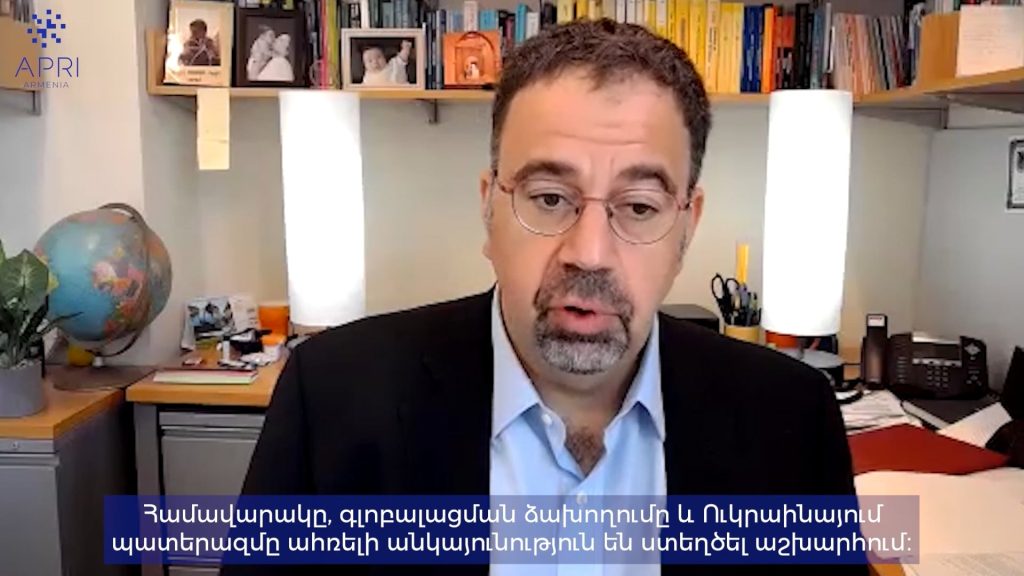
Inclusive Institutions and Economic Growth: Lessons for Armenia
Nestled at the nexus of regional and global power centers, how can Armenia make the most of its position and future prosperity? How can Armenia learn from other country models and apply lessons from how other states succeed or falter? As the co-author of Why Nations Fail: The Origins of Power, Prosperity, and Poverty, Daron Acemoğlu brings
his insights to share.
- Daron Acemoğlu, Massachusetts Institute of Technology
- Moderator: Raffi Kassarjian, Sensyan
17:00
Iran: Today and Tomorrow (Examining the JCPOA)
Iran is a major regional player and one of only four neighbors of landlocked Armenia. Despite that, its domestic developments and foreign policy trajectory are not well understood. Bridging perspectives from speakers in Washington and Tehran, this session will provide insights into the country’s current realities and likely development scenarios, including potential shifts ahead based on the pivotal negotiations over Iran’s nuclear
program.
- Davoud Gharayagh-Zandi, Shahid Beheshti University
- Narges Bajoghli, Johns Hopkins SAIS
- Moderator: Armen Sahakyan, APRI Armenia
Panel Discussion
- Ashot Arzumanyan, Partner, SmartGateVC
- Harut Martirosyan, CTO, Intent.ai
- Suzanna Shamakhyan, Vice President, Foundation for Armenian Science and Technology (FAST)
- Moderator: Raffi Kassarjian, CEO and Principal Advisor, Sensyan
17:45
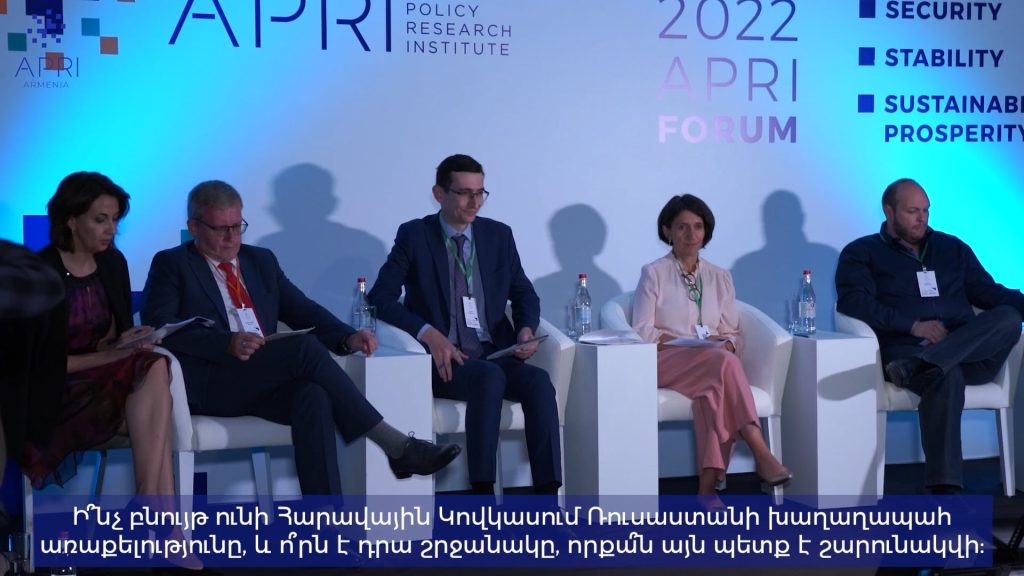
Armenia-Russia Relations in a New Reality
This year, Armenia and Russia mark 30 years of diplomatic relations, after centuries of being closely entwined. Since the autumn war of 2020, Russia’s role in the South Caucasus has expanded dramatically; the region now relies on Russia’s presence to maintain a tense security equilibrium and avoid an outbreak of war. What might be the future of this role for Russia and its relations with the states of the South Caucasus?
- Andrey Kortunov, Russian International Affairs Council
- Moderator: Vache Gabrielyan, Dean, Manoogian Simone College of Business and Economics, American University of Armenia
——-
- Konstantin Kurylev, People’s Friendship University of Russia
- Anna Ohanyan, Stonehill College
- Nerses Kopalyan, University of Nevada, Las Vegas
- Moderator: Leonid Nersisyan, Armenian Research & Development Institute
18:45
Closing Words
9:00
Registration and Breakfast
10:00
Welcome Back and Fireside Chat:
Armenia’s Strategic Future: The Demographic Balance
One critical issue underpinning Armenia’s policymaking and future prosperity is its demographic outlook. What are the current trends and projections shaping the country’s strategic future? What interventions and solutions can strengthen this picture? What are the trade-offs of the different demographic policy scenarios that Armenia may adopt?
- Tigran Jrbashyan, Ameria Management Advisory Services
- Moderator: Eric Hacopian, CivilNet
10:30
Global Keynote: What Have We Learned in 3 years? In 30 years? In 3,000 years?
Armenians are an ancient people, but live in a relatively young nation-state. What are the relevant lessons from our immediate, medium-term and far-reaching history that can inform our choices for the future? How can we learn from the mistakes of the past and set a strong vision for the way forward?
- Stephan Astourian, University of California, Berkeley
- Moderator: Nana Shakhnazaryan, APRI Armenia
11:00
(Re)thinking Foreign Policy: Armenia-China Relations
Implementing full-spectrum diplomacy with a clear strategic vision is an ongoing challenge for any country’s foreign policy. This session will explore how Armenia can best muster all the tools available in its foreign policy tool kit, especially when it comes to promoting bilateral relations with China. We will hear from specialists in Yerevan and Beijing on the trajectory for bilateral relations, leveraging the expertise of those who have repatriated to Armenia after years of living and working in China.
Interview
- Nare Haroyan, Advisor to the RA Minister of Economy
- Moderator: Henri Arslanian, University of Hong Kong
——-
Panel Discussion
- Yun-tian Zheng, Renmin University
- Mher Sahakyan, China-Eurasia Council
- Moderator: Henri Arslanian, University of Hong Kong
13:15
The Briefing: Public Health and Prosperity
Public health policy has been at the forefront of many minds, especially since the outbreak of the COVID-19 pandemic. A healthy and resilient population is the cornerstone of a country’s security, stability and sustainable prosperity. This briefing session will explore the current state of Armenia’s public health and what steps could be taken to further enhance this critical sector.
- Anahit Avanesyan, RA Minister of Health
- Moderator: Kim Hekimian, Columbia University
13:45
Imagining and Managing Regional Integration
Regional integration can be a double-edged sword for a small economy, especially in the short term. How does Armenia integrate into the wider regional web after 30 years of blockade and ensure its industries are competitive and viable? Additionally, how can the country effectively address the social and political risks of such rapid change?
- Georgi Derluguian, NYU Abu Dhabi
- Anna Ohanyan, Stonehill College
- Moderator: Eric Hacopian, CivilNet
15:30
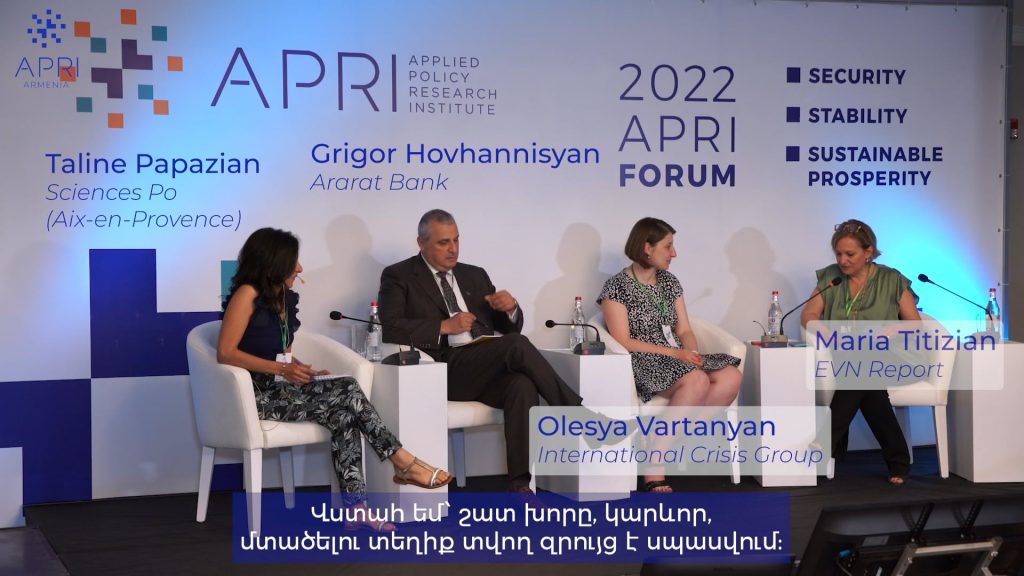
Future of the West in the Caucasus
After the fall of the USSR, the US and its European allies were actively engaged in the social and economic development of Armenia. Following a lull in 2020, they have re-engaged more actively in the security and development balance of the South Caucasus. What is the current impact of these policies of re-engagement and what might be their future direction?
- Olesya Vartanyan, International Crisis Group
- Paul Stronski, Carnegie Endowment for International Peace
- Taline Papazian, Sciences Po (Aix-en-Provence)
- Grigor Hovhannisyan, Ararat Bank
- Moderator: Maria Titizian, EVN Report
16:30
Turkey: Today and Tomorrow
Sociopolitical and economic dynamics within Turkey have a direct impact on the wider region, particularly in the way they shape Turkish foreign policy. As a NATO member state with growing ambitions and interventions from North Africa to Central Asia, Turkey’s geostrategic footprint has grown dramatically in the past decade. This session will explore the current political, ideological, ethnic and socioeconomic trends in the country and
how they may shape Turkish policies.
- Steven Cook, Council on Foreign Relations
- Amberin Zaman, Al-Monitor
- Varuzhan Geghamyan, Yerevan State University
- Vahram Ter-Matevosyan, American University of Armenia
- Moderator: Lara Setrakian, President, APRI Armenia
17:15
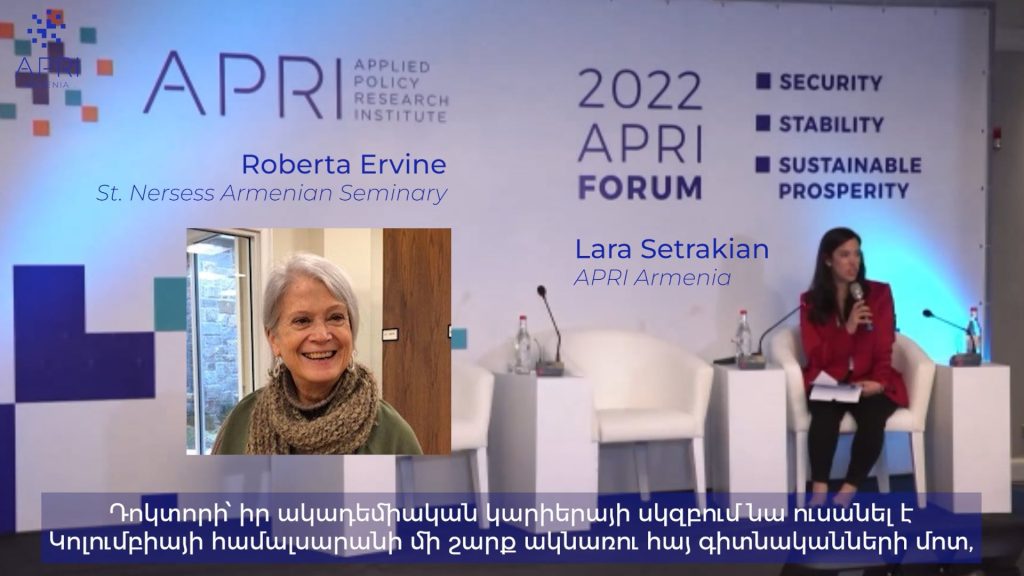
Global Keynote: Toward an Armenian Renaissance: Character/Resilience in History
Armenian history is full of tragic and turbulent chapters. And yet, despite all the hardships, generations of Armenians have been able to overcome their challenges, envision a future and build institutions that have endured for centuries. This keynote session will explore unique attributes of Armenian history – strengths displayed both individually and collectively – that have enabled a people to persevere and propel themselves forward. What key characteristics did our ancestors show that we can embody, when we need
them now?
- Roberta Ervine , St. Nersess Armenian Seminary
- Moderator: Lara Setrakian, President, APRI Armenia
17:45
Closing Words
COMMUNITY GUIDELINES

APRI Armenia is committed to creating an inclusive environment for dialogue in an atmosphere of mutual respect. It is our duty and obligation to maintain an exchange of ideas that is free from harassment, discrimination and threatening or disrespectful behavior. We expect that all speakers and participants will abide by these guidelines.
APRI Armenia reserves the right to refuse admittance to or remove any person from its events at any time. This includes, but is not limited to, attendees behaving in a disorderly manner or failing to comply with our community guidelines. We do not tolerate harassment of event participants in any form.
We hope you will enjoy the company of the distinctive speakers, facilitators and participants who are present at our events. We convene in the spirit of mutual understanding and with an appreciation of what each individual brings to the whole conversation.
Artists In Residence

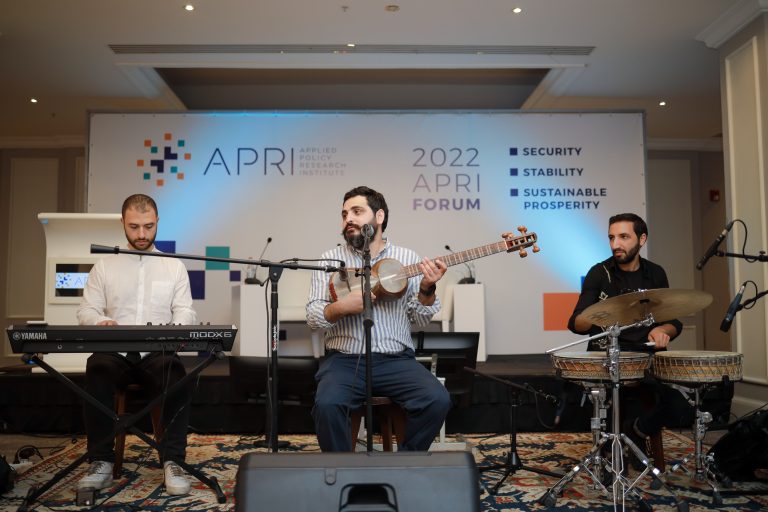
Tarup is an Armenian revival trio re-imagining folk music to shed light on new post-
traditional sounds, combining the mesmerizing melodies of the tar with a bold association of jazz, electronic keyboards and percussion. Tarup is full of crafted harmonies, modern improvisations and distinctive acoustic sounds, sometimes with an electronic touch.
The trio was formed in 2011 by Miqayel Voskanyan, a tar player, composer and singer, who has managed to create modern, innovative sounds using an ancient instrument
historically limited to traditional folk music.
Musicians:
Miqayel Voskanyan – Tar/Vocal
Arman Peshtmaljyan – Keyboards
Movses Ebejian – Percussions
Photo Gallery

Session Recordings